

 Adele Williams ~ Lecturer in Equine Medicine at University of Surrey
“I specifically requested one of the male vets, but it is just a vaccination so I do hope you’ll be able to do that …”
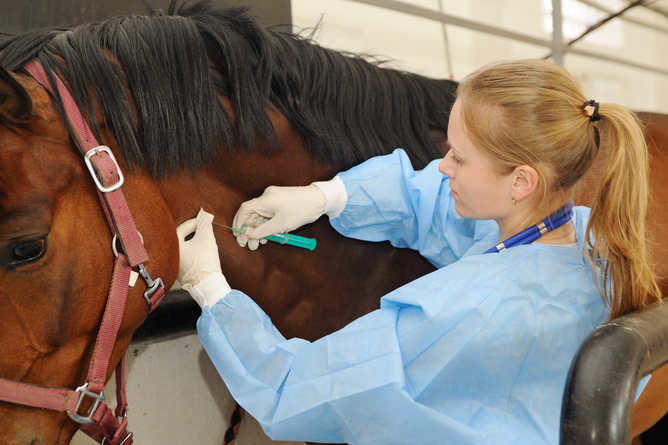 Picture this. Your prize horse needs a vaccination. Who should turn up to deliver this but a veterinary graduate of ten years, specialist in equine internal medicine and teacher to veterinary undergraduates. Today is your lucky day! Or not.
“I specifically requested one of the male vets, but it is just a vaccination so I do hope you’ll be able to do that …”
Emma Watson’s recent UN speech got me thinking about when I’ve experienced sexism during my professional life. I am a lecturer in equine medicine at the University of Surrey. In the UK about 85% of vet graduates are female and Emma’s speech hit on a truth that is perfectly illustrated in my experiences as a female veterinarian.
Shouldn’t happen to a vet
The above example is one of many. I turned up at a yard one morning to vaccinate horses. A middle-aged woman greeted me with the above statement, and at the time I smiled politely and quietly got on with my job while secretly thinking: “I’m more qualified and have dealt with a far higher and more complicated caseload than any of the male vets at the practice. I am more than capable of giving injections and filling in vaccination forms.”
But it also made me nervous and made me think: “I hope this horse doesn’t react badly to needles and it doesn’t go wrong to validate any of this person’s opinions.”
I worked hard to become a specialist vet. I have a passionate dedication to equine health and welfare. Needless to say I’m capable of vaccinating a horse and much more beside – and that has nothing to do with my gender. And of course, the vaccinations went without a hitch.
Had I been a recent graduate, this person’s comments may have been enough to push my nerves over the edge. The horse may have picked up on that and reacted badly to the needle, becoming a self-fulfilling prophecy, but for the wrong reasons.
Was I shocked to hear this kind of seemingly sexist attitude? Only slightly. My experiences of negative treatment due to my gender have most often been from clients rather than the profession itself. Interestingly, those attitudes have largely been directed from female clients.
Underpaid, under-represented
Women have struggled to enter certain areas of the profession, such as orthopaedic surgery, farm animal practice and high-power positions in higher education. And there are some veterinary practices that have a very high ratio of male to female vets – and where all the partners in the practice are male.
This is becoming more noticeable as times have changed; where once 99% of new graduates were male, today, the vast majority are now female. While there are many possible factors that may contribute to the under-representation of women in some areas of veterinary work, sexism is one factor that warrants consideration. Further research is urgently required to understand why woman are under-represented in certain areas.
For young students the attitude is part of the learning experience – I’ve had male vet students with me in practice when clients, invariably female, have presumed that the student is my senior colleague or that I am the student. I’ve addressed this problem by introducing myself as the vet and the student as the student; yet still have had the client ask the male student’s opinion over my own.
I recently read an article written by an Australian male student on sexism he has noticed towards his female colleagues. His words put eloquently into reality the position the industry faces:
I still come across, and will continue to come across, sexism in the vet profession. As a male I am more employable, can earn more money (mean salary in the US is US$112,000 compared to $88,000 for females – much lower for both in Australia) and am more likely to enter into a practice partnership or ownership. All of this is despite the fact that there are plenty of females in my course who will make better veterinarians than I could ever hope to be. It’s because I’m a male – and it’s because of inequality.
Universities and private practices should closely examine their employment policies so that new graduates are given support and equal opportunities. We as a profession need to engage with the public and ensure they understand that female vets are just as suitably well-qualified and skilled as male ones.
The key aim for all veterinary schools is that their graduates, regardless of gender, are confident, compassionate and excellent veterinary surgeons. Indeed, the issue has been raised with the Royal College of Veterinary Surgeons, the governing body of the veterinary profession, and the effect of sexism and gender inequality will be on the agenda for forthcoming projects around the well-being of the profession and its longer-term direction.
This article originally appeared in (The Conversation)
Categories: Horse Health, Horse News








I have had both male and female vets for my cats and it it the way they treat my animals that matters to me —-not their sex https://www.youtube.com/watch?v=mxZb-JYAwQ0&feature=youtube_gdata_player
LikeLike
http://www.onegreenplanet.org/animalsandnature/quotes-that-will-inspire-you-to-fight-for-animals
LikeLike
Why is everything somehow sexism or racism nowadays? It’s so overdone, I’ve tuned out.
LikeLike
Just for the record: I admire, trust and am so grateful for the female vets in my animals’ lives. My regular horse vet, Dr. Ashley, just came to the barn, 2 days ago, ON A SUNDAY evening, to care for my mare’s cut leg and took her time, even though it was late and rainy, to do everything necessary. She was completely thorough and her abilities and knowledge were superb. Once when one of my horses colicked and she couldn’t come (it was a colicky summer here) she sent her female associate, who, again, gave the best care I could have conceived of and saved my horse’s life! I agree with the comment above that gender couldn’t possibly have anything to do with the skill of a vet. It’s the care they give that is the only thing that matters. I’ve have extremely positive experiences with men and women vets. I am grateful to you for the work it took to gain these skills and for the dedication, devotion and love of horses that you share with the wonderful vets in my animals’ lives. Thank you.
LikeLike
Like her pics- seem to get my heart. Here’s a horse one. https://www.facebook.com/153285945646/photos/pb.153285945646.-2207520000.1415834972./10154552616465647/?type=1&theater
LikeLike