
R.T. Fitch
R.T. Fitch’s life has been anything but ordinary. Straight out of high school, he joined the U.S. Air Force Band during the Vietnam era, and while stationed in Hawaii, he spent weekends at Sea Life Park training penguins, sea lions, and whales. His path through life has taken many unexpected turns—including more than a few lessons in love—until meeting his wife, Terry, brought a lasting partnership and a shared passion for animals.
Over the course of his adult career, R.T. worked internationally in multiple countries, gaining a broad, global perspective that colors both his worldview and his writing. Now rooted in Texas, he and Terry live on a small farm surrounded by four-legged companions with paws, claws, and hooves. Together, they have devoted years to equine rescue and wild horse protection.
An ordained volunteer chaplain and professional Santa Claus for a local historical society—with Terry by his side as Mrs. Claus—R.T. brings warmth, wisdom, and joy to every season. His work reflects a life of service, wonder, and connection to both people and animals.
He is the author of Straight from the Horse’s Heart, a moving collection of true rescue stories and spiritual reflections, and Fangs of Light, a supernatural tale steeped in symbolic and metaphorical storytelling. The first in a planned trilogy, Fangs of Light blends myth and mystery to explore themes of identity, redemption, and the power of empathy—offering readers not only suspense and intrigue but a deeper look at the light and shadow within us all.
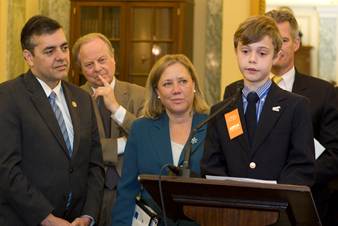
held a press conference last Wednesday with members of Congress, celebrities and citizen advocates to push for passage of my legislation, the American Horse Slaughter Prevention Act. If passed, this would prohibit the inhumane killing of American horses for human consumption in the United States and stop the transport of horses across the border to Canada and Mexico for slaughter.
The U.S. Bureau of Land Management is investigating the shooting deaths of nearly a dozen federally protected wild horses and offering a $10,000 reward in connection with the four separate incidents reported in California and Nevada since the beginning of the year, agency officials said Monday.
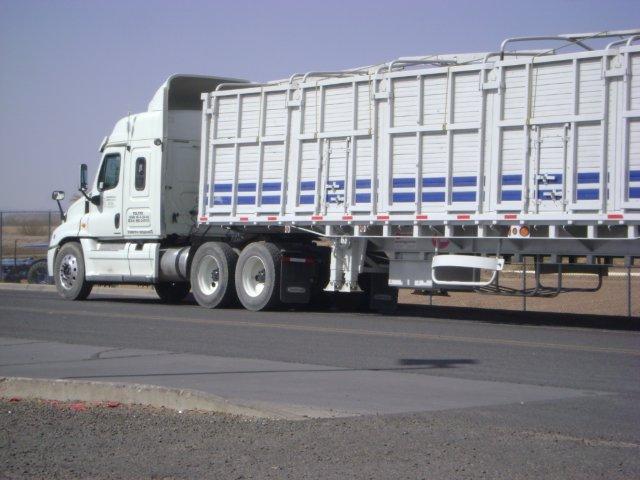
The following abridged investigative report may be the best way of describing what we found in Presidio, TX and what took us there. It is important to remember that the situation at the export pens in Presidio is what is found everywhere along the horse slaughter pipeline.
To begin with, the National Association of Conservation Districts (the “mother” of all Conservation Districts) is partnering in a way that promotes IUCN and ICLEI USA, thus pushing Agenda 21, the UN’s action plan that will do away with your private property rights and Constitutional rights.
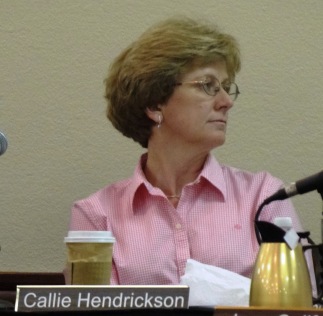
The Bureau of Land Management’s Wild Horse & Burro Advisory Board meeting (April 2012), was the first meeting including Sec. of Interior Ken Salazar’s new appointee, Callie Hendrickson. Hendrickson has served as an Executive Board member of the National Association of Conservation Districts, and works for the White River and Douglas Creek Conservation District in Colorado.
When a thoroughbred thunders past cheering racetrack crowds, it does so with the help of an off-track entourage of trainers, handlers and owners providing constant, doting care.
But for the horses no longer making money on the racetrack or in the breeding barn — when they become too old, injured or too slow to race — that attention quickly evaporates. And their future becomes anything but certain.

COROLLA, N.C. – Beach driving fees in Hatteras and a new global advertising campaign pitching Corolla’s wild horses could send thousands more this summer to the Currituck Outer Banks, where beaches are already teeming on summer weekends.

The Humane Society of the United States issued a report detailing the food safety risks associated with consuming meat that originates in American horses. Horses in the U.S. are primarily used for companionship or competition, therefore they are not treated in the same way as animals raised for human consumption. Horses are commonly given pharmaceuticals that have been banned for use in food-producing animals by the U.S. Food and Drug Administration and the European Commission’s Food and Veterinary Office.

“A lot of people give up on horses, just because of an injury or old age or no matter what it might be, but an animal’s not done ‘til they’re done. You might not win all the races, but you need to let an animal do what they’ve got to do.”

DIXON, Ill. — The small-town bookkeeper dazzled friends and co-workers with invitations to her immaculate horse ranch and home, where she displayed trophies hauled back from world championship exhibitions and visitors in cowboy hats arrived to buy some of the best-bred horses in the nation.
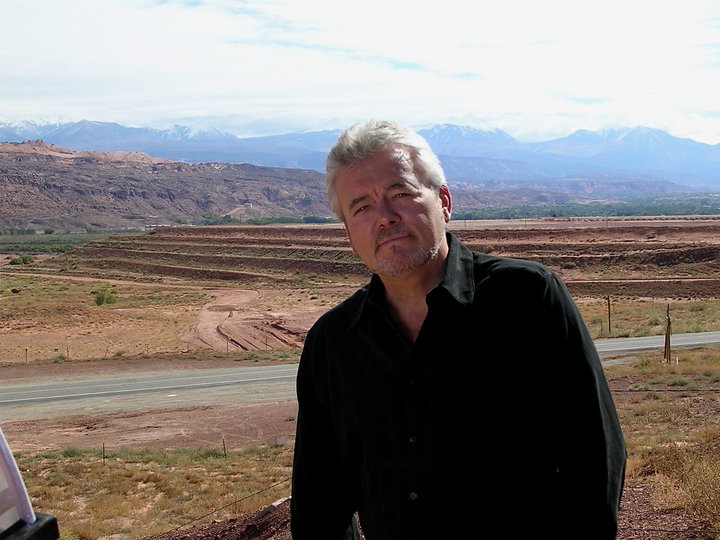
Officially, anyway, the news that the BLM is finally willing to consider a public-private partnership with wild horse advocate Madeleine Pickens is a good thing. After all — as reported in this space many times — the federal wild horse and burro program is a dismal failure. So any proposal that might reinvigorate the program, do a better job of caring for the mustangs and the public range, while also saving millions of taxpayer dollars, is a step in the right direction, even if it is a small step. In that sense, the BLM deserves a round of applause.


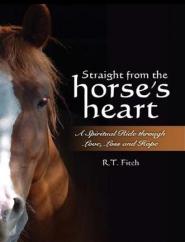





 Straight from the Horse's Heart
Most Recent Comments