

Forward by R.T. Fitch, article by Marjorie Farabee ~ Wild Horse Freedom Federation
 “It is, of course, ‘Feel Good Sunday’ and what better way to celebrate the day but to share with you some of the work of Wild Horse Freedom Federation’s Director of Wild Burro Affairs, Marjorie Farabee on the distant Caribbean island of Bonaire as she currently is struggling to save the Bonaireans donkey (buriku) from total eradication on this small island of only 70 square miles.
She has been there, along with others, for several weeks struggling to get the message out to the local government and to the Bonairean public. We will be highlighting her efforts with reports, pictures and documentation through out the upcoming week.
But for today we share with you a document that she has submitted which was conceived in her mind but speaks from her heart on the truth, the origin and the importance of our small, long eared equine companions, the donkey.
This Sunday we thank Marjorie for her sacrifice as she fights to save these beloved creatures and we pledge our support in her fight for the very lives and souls of these magnificent creatures. We love you Marjorie” ~ R.T.
~~~~~~~~~~~~~~~~~~~~~~~~~~~~~~~~~~~~~~~~~~~~~~~~~~~~~~~~~~~~~~~~
BENEFITS OF THE WILD DONKEY~A KEYSTONE SPECIES
Donkeys are well known guard animals. They are popular for their protective instincts toward geese, chickens, sheep, goats, cattle, alpaca’s, llamas, and other benign species. If the donkey is raised with a benign species, their instinct is to protect that species from dogs, coyote, cats (large and small) and other predators. Donkeys will work as a team to remove a malevolent animal from their territory.
A donkey’s diet is a mixture of graze and browse, with a high tolerance for fibrous, dry materials. As a result, they are known fire preventers. As they browse, they eat dead leaves, fallen trees, and other flammable material which of course leads to a reduction of fire. On Bonaire, a fire can be started with something as simple as an improperly discarded glass bottle. The sun going through the glass will result in a flame. If there is a great deal of flammable material present the fire is fed to a greater extent and is therefore, much harder to extinguish. http://awionline.org/sites/default/files/uploads/documents/FinalWildHorseandBurroReportWithStateMaps10-26-12.pdf
A donkey’s dung has great restorative value to soil. Because they are post gastric (hind-gut) digesters, unlike the ruminant goats, the plants they consume are not completely broken down. This leaves the dung to be restorative because of the retention of viable seed, and the humus quality of the dung itself. This leads to moisture retention in the soil and a buildup will encourage plant life of all kinds from the seed within their dung. Their graze and browse of rough dry material also exposes buried plant life to growth. This is called facilitation because this behavior also exposes more palatable plants to other species for consumption. http://www.princeton.edu/main/news/archive/S32/93/41K10/index.xml?section=featured
As a keystone species, (A keystone species is a species that has a disproportionately large effect on its environment relative to its abundance.) it is well known that donkeys are a part of a chain of life. Many plant species, animal species, bird species and insects are dependent on the behaviors of the donkey for their existence. For instance, a donkey is well-known as a diviner. They are able to find water beneath the surface, they then dig down three or four feet to find the water that is hidden there. Thus, not only is the donkey’s thirst satisfied, so are a myriad of other life forms dependent on the water source the donkey just uncovered. During times of drought, this is a critical survival function for many species. Donkeys are able to survive in extremely arid climates like the Sahara desert, because they have this ability, and because they can go for as long as four days without water. They are unique in their ability to lose 30% of their hydration and capacity to replenish it in five minutes. http://animals.about.com/od/animalswildlife101/f/keystonespecies.htm http://www.nescent.org/eog/documents/MicrosoftWord-Rewildingv2.pdf http://books.google.com/books?id=fPR0jbjGLZIC&pg=PA236&lpg=PA236&dq=keystone+species+equus&source=bl&ots=UeOxZSYJgR&sig=EhFAhqHkQv9xvgPQscQP2VOSQLI&hl=en&sa=X&ei=W-IlU4yFJZTqkAf3lYCYDQ&ved=0CGgQ6AEwCA#v=onepage&q=keystone%20species%20equus&f=false
http://www.nwhi.org/inc/data/GISdata/docs/WHROW/chapter6.pdf
Wild donkeys are a tourist magnet. As they are quickly disappearing in the wild, it is becoming ever more difficult to find locations where they can be seen living freely in their environment. There are people the world over who revere donkeys and will travel as far as they need to go to see them. In fact, for those with diverse interests, the donkeys of Bonaire are in a particularly advantageous position of attracting visitors who want to enjoy the many other attractions that abound here with wild donkeys being the icing on the cake. Numerous visitor polls indicate the popularity of seeing the wild donkeys of Bonaire.
Oatman, AZ was a ghost town, but the few remaining residents there embraced the wild burro population, set up traffic laws, signs and other safety measures to protect them. They promoted the wild burros (donkeys) as a positive part of experiencing their town and soon tourism grew. Eventually, Oatman, AZ became a “go to” place on people’s travel itineraries. They boast visitors from all over the world who come simply to see the wild burros. This can be done in Rincon, once the Donkey Reserve is set up in the area. Rather than focusing on the prospecting history as they have done in Oatman, Rincon can focus on conservation and the eco-system. While conducting eco-tours the guides can also describe the history of the island from the slave period to present day Bonaire. It will fascinate the visitors to get a glimpse into the past and an understanding of the future of Bonaire and the part the donkey plays in conservation as a keystone species. http://www.desertusa.com/video_pages/oatman_movie.html https://www.google.com/search?q=oatman+az+images&rlz=1C2VASU_enUS554US554&tbm=isch&tbo=u&source=univ&sa=X&ei=i94kU9LiOIvpkAfbhYCYBg&sqi=2&ved=0CFEQ7Ak&biw=1280&bih=640
Setting up eco-tours at the BONAIRE DONKEY RESERVE will generate much needed revenue for the people of Rincon. The people can rent out spare rooms in their homes. Rincon can even build a new bed and breakfast to accommodate the tourists who come to see and learn about the wild donkeys of Bonaire. This in turn, will lead to other jobs that will become necessary, such as cashiers and other workers in restaurants, supply stores, clothing stores and souvenir shops.
Donkey trekking is extremely popular in Europe, and can easily be set up in Rincon. In donkey trekking the donkey is hired as a pack animal and companion to the person or family that wants to explore the beauty of the island on foot. Check in stations are set up for the trekker to reach and this is where the donkey and the trekker will spend the night before setting out again the next day. This is very popular for numerous reasons. The companionship of the donkey is a big part of the experience, and the satisfaction of exploring in donkey time is another. The beauty and wonder of the island is more fully appreciated as a result. Guides could also be a part of such a plan thus insuring employment for persons on Rincon and the safety of both the donkey and the trekker. http://www.touraventure.com/gb/pyrenean-donkey-trek/
There is another fun sport enjoyed by Americans called pack burro racing. This was originally set up when prospectors raced to stake a claim to beat out a competitor. Now, it is enjoyed as a sport and people journey to Colorado, USA every year to route on their favorite racers. An offshoot could be the pack burro race with bets placed on the racers, so that it can be a year round event. Pack burros (donkeys trained to carry a load) are carrying a pre-determined amount of weight and racers may not ride their donkey. They race the entire course, which goes through all kinds of habitat, pushing, pulling and running alongside their faithful companion donkey. The crowds love it! http://live.wsj.com/video/a-road-race-for-man-woman-and-donkey/A0184381-553D-45EE-9B28-6A9CF2751985.html#!A0184381-553D-45EE-9B28-6A9CF2751985
The donkey watchers who will keep count of the donkeys and monitor them for health can work with an environmental scientist and ecologist to determine how many donkeys can be sustained on the Reserve. Once an excess number is reached, they can gather the young ones (leaving the old alone is essential to the well-being of the herd) and train them to pack. Generally, age four or five is ideal since this is when they have reached full growth. Weight limits for the donkeys must be strictly adhered to for the safety of the donkey.
Donkeys can also be used in therapy programs for both the disabled and the emotionally crippled. They are such intuitive animals that they have the uncanny ability to draw a person out emotionally and physically. They have also been known to elicit speech from children who have never uttered a single word. Children who have found themselves in trouble and in need of guidance benefit greatly from an opportunity to work with donkeys. A program that allows them to be a part of caring for the donkeys in training could prove highly successful as an intervention tool. Donkeys do seem to have an uncanny desire to be gentle to children and are extremely successful in working with them as a result. The Donkey Sanctuary UK has had a program in place for children for several decades and has a high rate of success in helping children with all kinds of disabilities. http://www.thedonkeysanctuary.org.uk/donkey-assisted-therapy
The beach donkeys of the UK have been around for a century bringing joy to visitors with their brightly colored gear and handlers who treat them like children. The beach donkeys generate a great deal of tourism as well. Recently, it was recognized that the weight of most adults was too great for the safety of the donkeys so they are limited now to giving only children rides on the beach. Nonetheless, the business of beach donkeys is strong in the UK and leaves a positive impression forever on the minds of the tourists toward the donkey. This will allow the people of Rincon and surrounding communities to own their own donkey that they dress brightly for tourist’s children. They can station themselves in an area that is safe and employ a photographer that will provide photos of this memorable event in their young lives. https://www.google.com/search?q=Beach+donkeys+UK&rlz=1C2VASU_enUS554US554&tbm=isch&tbo=u&source=univ&sa=X&ei=NOAkU8ipNNLfkQfftIDADw&ved=0CDoQsAQ&biw=1280&bih=640
The owners of Bonaire Horse Ranch have expressed a strong desire to train and use donkeys at their ranch to assist children learning to ride. They could also set up the children’s therapy program that I mentioned earlier in this document. Unfortunately, they are not being allowed to adopt any donkeys from the Donkey Sanctuary Bonaire, despite the fact that many of the donkeys now housed there are suffering from starvation and lack of proper care.
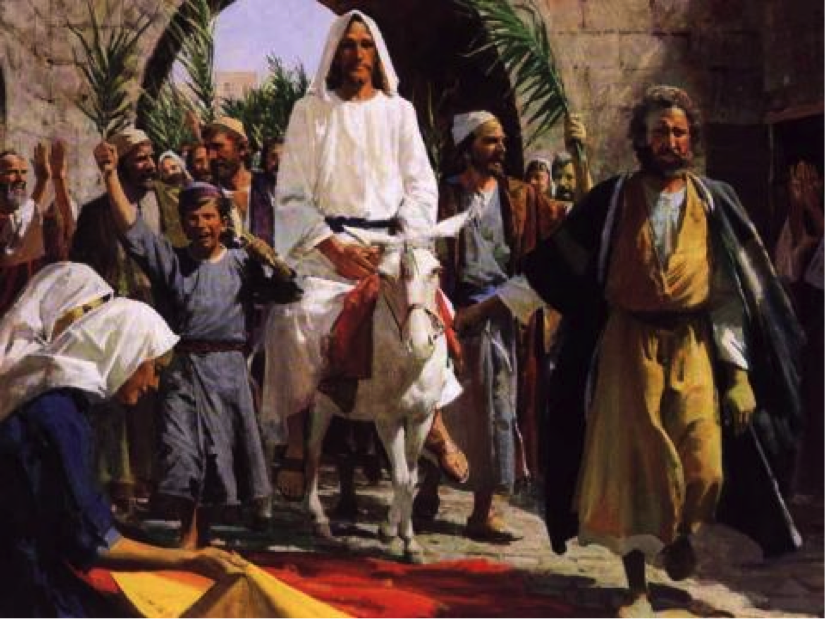
It is very unfortunate that an animal so revered by God that He created the donkey for Jesus to provide him comfort on the day He was born and the day He died, is being marked for eradication. Christ rode the donkey into Jerusalem as a sign of peace. He asked that He be brought a donkey foal pure and white, and this He rode into Jerusalem on Palm Sunday. The donkey witnessed His crucifixion and His ascension. As he mourned beneath the cross the shadow of the cross was burned into his back. The donkey was so important to Christ that they are mentioned 444 times in the Bible. The humble donkey is also the only mammal given speech. How could people who profess to love God so malign such a docile, peaceful animal so revered and loved by Christ?
The most obvious reason for preserving the donkeys of Bonaire is that they represent the culture of the people who live here. Removing them will cause a harm that cannot be measured in dollars and cents. It goes to the core of who they are as a people. Respecting these core values is not simply a courtesy it is a right. The donkeys have been here for nearly 500 years. As a result they have not only become an intrinsic part of the eco-system, they have become a part of the history and culture of the people who call this home.
Submitted by,
Marjorie Farabee,
Director of Wild Burro Affairs with Wild Horse Freedom Federation,
Director of Wild Burro Protection League,
Equine manager at Todd Mission Ranch the parent of TMR Rescue, Inc. which is home to over 400 donkeys, mules and horses, 90% of which are donkeys.
Related articles


Categories: Wild Burros





 Straight from the Horse's Heart
I do need to point out one mistake. R.T. I told you it is 70 square miles, accidentally. It is actually 111 square miles with a population of 17,000 compared to its sister island Aruba which is 70 square miles with a population of 100,000. Interestingly, Aruba also has a small herd of wild donkeys that are protected and coming back after a serious illness nearly wiped them out. They have a great deal more traffic, more people, and less land space, yet they are managing a herd of approx 60-100 wild donkeys on the island in freedom and safety.
LikeLike
Marjorie and all of the people involved in this are extremely dedicated and just down right AWESOME.
LikeLike
Thank you so much for the research and support you gave us, grandmagregg.
LikeLike
The plight of these animals and their fight for life speaks volumes for the inhumanity in their, “humane” situation.
New management methods are a MUST. Thank you TMR for your valiant efforts.
LikeLike
Marjorie is truly a Donkey Warrior. She has been gone from her own donkeys for many weeks doing what it right. Helping to save those who do not have a voice. Bonaire Wild Donkeys need a safe haven not a prison camp. I am so proud of her and all involved..Many Blessings to Rona & her family for their dedication to these amazing creatures.
LikeLike
Rona has not slept since she got here and is taking care of her two year old and 10 year old as well. Couple that with internet that was going down constantly and it is a miracle we got done what we got done. It took a village. I thank all who contributed to the effort, with all of my braying heart.
LikeLike
Thank you for posting this.
LikeLike
I LOVE Marjorie’s joy and example. I loved watching how Charlie got to visit places most only get to dream about.that little guy saw more than most in his short life. But it also shows the true dedication of those involved at TMR. You can’t have a rescue, do the work and not be affected by the very animals.
Marjorie is so lucky to have the knowledge and know how to teach people what they need to know. She’s in the trenches but more animals be saved and treated better for it.
Thank you Marjorie for your dedication and example to all of us. May all of us be granted even a smidgen of your care, know how and dedication.
LikeLike
Now I am blushing. Thank you. Charlie Love abounds always. As you know we are also spearheading The Charlie Donkey Project which is dedicated to producing a database of medical information specific to donkeys so that we can target and embark on research so desperately needed for donkeys.
LikeLike
A great article on the irreplaceable value of the donkey, be they still wild or domesticated. All donkeys deserve to be loved and treated with respect and love. If those in power would look past their noses and see how just how valued and valuable donkeys are they would be seeking them out instead of trying to decimate their herds.
LikeLike
Morgan, you are right. It is all about perception which means we need to promote in a positive way the value of donkeys. It is intangible and speaks to our history and our culture as Americans. Everywhere you look the little donkey was the steam engine of progress. They deserve to be better treated all over the world.
LikeLike
Marjorie, this is the single best, most concise article I have read about all the benefits that these specieal animals created by God to be a helper for mankind.
I have commented about UNEP’s use of the 1992 Convention of Biological Diversity, Article 8 (h) and for those countries that did not ratify the CBD, UNEP inserted Article 8 (h) into the 1997 Update of the International Plant Protection Convention that went into force on 10/02/2005. This is the legal statute created through international treaty that explains how the wild horses in the West protected by the 1971 Wild Horse and Burro Act are being treated as North Caraolina’s horses have been treated since 1996. I believe there are a number of small details in different documents and biographies of the actors that support the hypothesis that the goal of the actors has been to have unfettered acces to the oil, gas, coal, rare Earth elements, precious metals, minerals, and other natural resource wealth in the West as well as Canada’s ranges in Alberta. But getting the public to go along with either legislative or administration actions that would allow this to happen were quickly shot down.
In this country, the iniators were FWS, The Nature Conservancy(TNC), and the International Union for the Conservation of Nature and Natural Resources(IUCN). After efforts failed in the 1970’s, this alliance decided to turn the job of getting rid of wild horses and burros over to the IUCN’s legal team in 1982. OTA Report on Harmful, Non-Indigenous Species of the United States (1993). This is part of the native versus non-native species construct created specifically as part of the three point UN Framework for the Environment.
The three points were man-made global warming, global loss of biological diversity, and the population explosion. The only piece of this I have really looked at in depth–though I have surveys all of them, is the issue of biological diversity because this is the piece that is affecting our horses.
Self-proclaimed experts doing double duty for the Nature Conservancy and the IUCN one of UNEP’s tools came up with this disease theory to apply to species that they identified as not native to area or a species that could not have arrived on its own to an area. This includes almost any terrestrial vertebrate that is on an island.
I haven’t said much about the biologist whose life’s work is the thread hoding all of these events together because of where he has been, what he has published, the effects of what he has published, the positions in universities he has held, the positions in U.S. governmental organizations, advisory committees he has served on, and organizations that he has been and is affiliated with that have given him such an unbelievable span of influence on what has been published on this topic and how it is has been published in such a way that the reader must be fairly knowledgeable to recognize where the misdirection and the truth in the articles actually are. He has edited several fairly prestigious journals where research on the origin of the horse has been published in such a way that you have to know enough to infer from the details that this means the horse is native to North America. These different strategies are sometimes referred to as graphic tricks, and he has an assistant desperately searching for a proteing, an amino acid, or a speck of RNA that disproves what other research has confirmed. Beware.
LikeLike
Please e-mail me the details. I need to know.
LikeLike
Marjorie, the biologist that came up with this scam has a special interest in eradicating non-native species on islands. In fact, he has spent some of his educational training eradicating every species that lived on an island and observing the repopulation of islands. In fact, he seems to believe he owns the science of island biogeography, and that he and his fellow arrogant but scientifically irrelevant peers should be able to dictate what species can live in what space anywhere in the planet. These two treaties were designed to give UNEP control of every inch of every country of the world as to what species could or could not exist where found.
This is not science. This is not how nature works. I guess we should not be surprised that these people either were uneducated in geology, paleoanthropology, paleontology, and the historical influence of glacial periods and warming periods have had on shaping our Earth, lowering sea levels during glacial periods which may be very large in some areas of the planet but not all area of the planet at the same time. Thus, there have been many times that ocean levels have been lower allowing large mammals like horses, mammoths, mastadons, camels, elephant ancestors, bison, saber tooth tigers, musk ox, reindeer, just to name a few, to travel from North America to western Europe via the Thule land bridge, from NA to Northern Euope via the Degree land bridge, and from Alaska to Siberia through a low lying grassland the size of Texas known as Berengia. Berengia was also used as a refugia by mammals during climate extremes, but after the last major glacial, the speed of the warming period and possibly the distributoin of ice melt resulted in a sea rise of 400-500 feet closing the opportunity to use Beringia as refugia for the last horses that were in North America, but not closing off the opportunity for them to have lived above the ice sheet or to have migrated to South America. The climate in North America and Eurasia where the horses survived was very similar as was the forage.
In fact, in contrast to what these IUCN-TNC self-proclaimed experts in the science that did not exist before they invented it, it was the large mammals traveling across the continents with plant seeds and spores tangled in their fur and mane along with insect eggs and larvae, not to mention plant seeds in their dung, that helped to spread the forage and types of insects that have led to the creation of similar, compatible habitats for mammals like horses and donkeys around the world.
You rightly point out that that the donkey is particularly adapted to warm climates. On the other hand, some horse species like the Arabian are adapted to warm climates, but for the most part the horse adapted to cooler climates. You can observe this adaptation just by noting that the species and horse sub-species with the smaller body mass is more successful in warm climates while the larger sub-species of horses are largers, generally have heavier coats and are more likely to have feathering down their sturdy legs.
Scientists that have been studying why some species became extinct in North America while the same species survived in other areas have found that the reasons that s species became extinct in an area at a given time is specific to the species. There is a great deal of similarity of both plants and animals throughout the world, and because the animals and other forces in nature such as the wind helped to spread the species around the Earth, the notion that species should be restricted to the borders where they originated seems extremely unnatural. This is particularly true with species such as the horse that migrated from North American during certain times, but as Jens Lorenz Franzen points out in his 2010 translation of The Rise of the Horse: 55 Million Years of Evolution, the horse always returned to North America and expanded once again. Of course, humans interfered prevented their natural return to North America, if indeed, they ever truly left.
However, the point is the entire theory of the alien, invasive, animal species that is a pest to plants—will trample plants, disturb the soil, overpower native species that have no immunity to them, steal natural resources that belong to native species is proving to be a bunch of bunk with no scientific relevance.
Horses and burros were singled out for vilification and the language used to describe them is custom designed to directly contradict the language Congress used in the 1971 Wild Free-Roamig Horse and Burro Act. Instead of living monuments and symbols of our pioneer spirit (which are also vilified through this rationale because we used the horse to take land from indigenous people and to fight other nations in order to get the land), the horse and burro are portrayed as the second largest threat to man’s survival on the planet due to their ability to destroy native plants. Which is somewhere along the line of insane to preposterous to anyone that knows anything about grazing animals—God did not design sidewalks for horses to use while grazing which he would have if he thought they were needed.
So horses are not living monuments or symbols of anything that should be valued under UNEP’s philosophy of the privileged, developed world’s exploitation of the undeveloped world, Horses and burros are now threats to the survival of biological diversity. They are one of the causes of species becoming extinct according to this theory although is absolutely no proof anywhere that one species has caused the extinction of another. No proof. No evidence. No science. No scientific method. Nada. Just theory. Just opinion. And theories and opinions cannot be accepted as scientific fact—predictions are not facts because the events have not happened, thus, there is no evidence.
According to this theory, small islands are particularly vulnerable to destruction by alien, invaders. Mass eradication programs of rabbits, rats, nutria, some snakes, have been undertaken on a number of islands with the encouragement of the IUCN because they needed evidence that their claims of damage by non-native invatives had some science behind it after they created the myth of the non-native horse.
Attempts to eradicate horses and burros on islands appear to be limited to the United States beginning in 1996 when the NPS at Cape Lookout National Seashore included the need to test a herd of North Carolina’s wild horses for Equine Infactious Anemia through a partnership with the North Carolina Department of Agriculture as part of the EIS to limit the number of horses to 60 or to remove all of the horses. Seventy-four horses were found to be positive with EIA and were subsequently euthanized. However, most of the horses that were euthanized were perfectly healthy and only tested positive as carriers of the trait, but the NPS and NCDOA euthanized all of them, and in 1997 they euthanized eight more. This led to the creation and passage of the Shackleford Wild Horse Protection Act.
Meanwhile, Fish Wildlife Service, continues to allow the ongoing experiment on how to eradicate small populations of horses through ensuring that they are genetically non-viable is ongoing. FWS’s has been given the responsibility of restoring endangered species, so if there is one federal agency that should be thoroughly schooled in all aspects of population biology, it is FWS. At least half of what was originally considered true and necessary for genetic viability of wild horse herds was based on wildlife population biology. It turns out that these original numbers may be far lower for long term genetic viabiity of species, than previous estimates.
Back to the facts, the biologist mythologist of the non-native wild horse does has claimed to be an expert in a number of areas, most of which he helped to invent. He does not claim this attribute in any of his writing, but he is described by his mentor as a population biologist, a real whiz. So here we have a biologist recognized and celebrated as one of their experts by both TNC and the IUCN, partners of FWS, and he writes an articles clearly designed to devalue and thus justify the removal of wild horses (and burros) regardless of public sentiment—he mentions public sentiment, but dismisses it as if further “education” by the Global Invasive Species Programme’s propaganda machine funded by TNC, IUCN, FAO, CABI, the World Bank and the Bank of the Netherlands, will eventually persuade people that the wild horses and burros are too big a threat to the survival of the planet to be allowed to survive. This is the mindset driving the extinction of our wild equids.
So think about the total irrationality of this propostions: Parties to the Convention are to prevent, control, and eradicate alien species where they occur and plants must be protected from animal pest species like horses and burros. So in order to save the planet, people all over the world have been directed through an international treaty supported by pseudo science invented by scientifically credentialed individuals more interested in making a big name for themselves as experts in a science that actually destroys biological diversity rather than preserves it. These people have completely disregarded all the order than nature has put into place, but the problem we all face is that this is law through international treaty.
However, there could be a very quick and logical out for us and every other country whose horses and burros are threatened or that have already been destroyed, and that is to dispute the listing of the horse and burro as non-native, exotic, feral, alien, invasive, animal pests of plants with the U.S. Department of Agriculture and through our elected representatives at the federal and state level. There are some excellent articles laying out some of what I have said. One is written by Dr. Mark Sagoff whose specifically addresses the work of the biologist mythologist that spent his college days eradicating arthropods in the Florida Keys. Another is written by Dr. Mark Davis. A third is about property rights as effected by E.O. 13112, but the author expresses some confusion about this E.O. is still being honored since President Clinton has been out of office for so long. Debbie Coffey taught us that E.O.’s have to based on some law somewhere—and the foreign to American values language that FWS has used consistently to describe our horses make looking at international treaties a plausible place to go since no one seemed to understand how the BLM could do what it has done unde the 1971 Act.
The construct of the native-non-native (non-native as harmful to native species like the Spanish flu) is not supported by the history of the natural world or how species naturally dispersed themselves throughout the world during different geological ages that provided avenues of travel that were not available during other times. This theory gives the ultimae decidison of what species can live or what species must die to human beings rather than nature and God, and their decisions as to what species should live and what species should be eradicated directly contradict the decisions nature has clearly made through her dicision to allow certain species to have such a wide menu of genetic variation that they can survive in any place where humans can also survive.
Marjorie, you have so well stated the rationale for preserving our wonderful servant spirits. I have written these too lengthy comments, so that you can, perhaps better understand who the enemies of our wild horses and burros are.
So much lust, envy, and determination to destroy all that is or symbolizes what our country has been and continue to be—so much greed and personal ambition, hubris, entitlement, and abuse of power through the misuse of science, but we have love and natural law on our side; we will not fail.
LikeLike
Hoofbeats, all of your explanation leaves out the one fact I do not already have. Name please.
LikeLike
Marjorie is the protector of all things Burro. She fought hard for the Texas State Parks Burros.
Wild Burro Protection League – operating under Todd Mission Rescue
https://www.facebook.com/Wild.Burro.Protection.League
LikeLike
🙂
LikeLike
It’s individuals who fight to preserve the plight of the animals that are threatened like the donkeys of Bonaire that open our eyes to the whole chain of events that these animals are vital in. Thank you Marjorie and TMR for making us aware and for fighting their corner.
LikeLike