

Source: by Vickery Eckhoff as published in Forbes
“…there is actually a waiting list of good homes for retired carriage horses…”
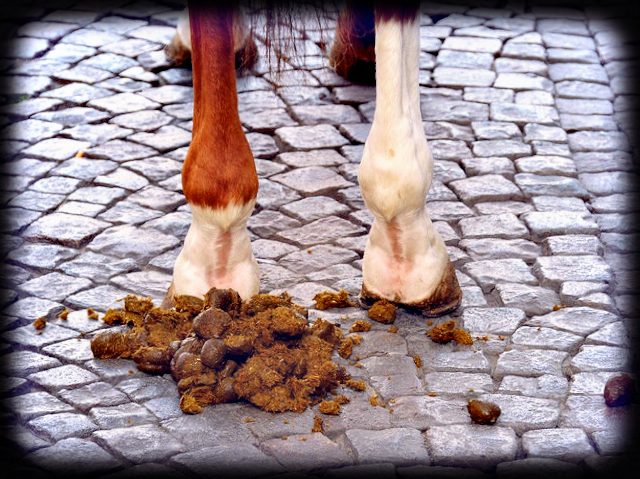 Mayor Michael Bloomberg misled the public in claiming that 210 hard-working carriage horses would go to slaughter if New York City’s carriage trade is shut down after next Tuesday’s election.
So that won’t happen? The horses won’t end up in a slaughterhouse, as stated in two separate Daily News articles, including “Bloomberg: If carriage horse business ends, horses will die” appearing on October 29, and another published the same day entitled “EXCLUSIVE: Both major mayoral candidates want to ban horse-drawn carriage rides in Central Park, but the effort to ‘rescue’ the horses could lead to their slaughter instead” ?
Not according to Jackie Beckstead, Director of Accreditation and Field Operations for the Global Federation of Animal Sanctuaries (GFAS).
This is a non-profit organization formed in 2007 by nationally and internationally recognized leaders in the animal protection field for the sole purpose of strengthening and supporting the work of animal sanctuaries worldwide. And since the Daily News articles came out claiming that none of the horses would find homes, Ms. Beckstead and GFAS have been quietly working to make sure that no NYC carriage horse faces the fate that the mayor is predicting.
“This isn’t about politics,” she says. “It’s about finding homes for all of the horses, and there won’t be a problem doing that.”
Since the articles came out, she’s contacted her extensive network of sanctuaries that take draft horses—precisely the breed who the soon-to-be-ex mayor and the grouchy NY tabloid seem intent on turning into horsemeat—and found plenty of takers.
“We found out who can take the horses and how many,” Beckstead states. “We are told by some of our experienced equine sanctuaries that there is actually a waiting list of good homes for retired carriage horses.”…CONTINUED
Click (HERE) to read the rest of the story and to comment at Forbes
Related Articles
- NYC Could Soon Be Horse-Drawn Carriages Free (news.softpedia.com)
- Michael Bloomberg Discusses the Many Ways to Use Animals (politicker.com)
- Latest horse-drawn carriage accident reignites calls for a ban (pix11.com)
- Mayoral politics threaten NYC horse-carriage rides (miamiherald.com)
Categories: Horse News, Horse Slaughter





 Straight from the Horse's Heart
If there is a waiting list of good homes …shame on them for not taking in horses in immediate danger and waiting clutching their pearls for a few carriage horses that at this time have providing owners.
LikeLike
Sorry this isnt about carriages but what the article on kaal tv .com temporary order against slaughter expires and they claim they will OPEN Monday????? Misouri and New Mexico????? Whats going on, is this in Dunnes head or is this possible to happen…..I thought they could not open if it expired because were at the decision point.
LikeLike
Australia’s Wild Brumbies need help, too:
http://www.abc.net.au/news/2013-10-30/aerial-cull-of-horses-to-take-place-in-the-kimberley/5057208
An aerial cull of wild horses is taking place in the Kimberley
Updated Wed 30 Oct 2013, 8:48pm AEDT
The Aboriginal Lands Trust has begun an aerial cull of thousands of feral horses in the Kimberley.
A survey two months ago, of Lake Gregory and the Billiluna Pastoral Station, found about 6,000 feral horses.
The Trust says the animals are a risk to the environment and public health, and to comply with the law they have to go.
It says an aerial cull is the most humane way to do that and has employed shooters in helicopters.
A plan to cull feral horses in the same area in 2010 was abandoned after a backlash from animal welfare advocates.
Libby Lovegrove, of Wild Horses Kimberley, says the animals are a rare breed and need protecting.
The State Opposition’s Lisa Baker has called for the cull to stop immediately.
“There’s babies, there’s foals whose mothers are shot who starved to death,” she said.
“This is not a civilised way of managing a population of horses.”
Ms Baker says traditional owners want to manage feral horse populations in other ways.
“They’re really cognisant of the fact that some of them will need to be euthanised, put down, whatever, but there is many opportunities for tourism, for breaking the horses in, and for using them more productively,” she said.
The Aboriginal Lands Trust says traditional owners have been consulted.
Its chairman Clinton Wolf says an aerial cull is the most humane way of reducing the impact of the horses on the environment.
“The RSPCA is heavily involved in this, it’s being overseen by them,” he said.
“We’ve got the Department of Agriculture involved, we’ve got two vets monitoring the process.”
The area’s former Indigenous Protected Area co-ordinator, Wade Freeman, says other options were considered and ruled out.
“Too costly and not humane at all,” he said.
“We even tried the option of darting and putting horses to sleep but when you’re looking at numbers of up to 10,000 it’s just not viable.”
LikeLike
Louie, I had heard of this, but didn’t know it had already started. Why we supposedly “sentient” insist on bludgeoning to death all the world around us is my greatest sorrow. It’s been clear for some time we are the cause of the 6th great extinction going on globally, and we seem intent on emptying our entire planet of all but people. Wonder how that will work out for our species…
On first read, I thought the “two vets” mentioned above were perhaps military vets. And one has to wonder about the twisted logic which enables one to think gunning innocent horses down from choppers is in any way at all “humane.”
LikeLike
Louie, I just contacted The Savory Institute to see if Mr. Savory has any opinions on this situation, he visited Australia in August and his life work was sparked by his own misguided killing of elephants to establish a nature preserve. See his TED Talk for more info…
Also found this while searching his website:
The Center for Food Safety (CFS) is a non-profit advocacy organization that promotes food systems that are safe, sustainable, and environmentally sound. Using a legal team, original research on agriculture, and grassroots organizing, CFS’ mission is to protect human health and the environment, achieved through careful monitoring of the agricultural industry for violations of food safety and environmental laws.
Learn more: http://www.centerforfoodsafety.org/
Maybe a good place to make aware of what is going on with horse slaughter and all its tangled webs.
LikeLike
I checked out the Center for Food Safety… not a word on horses or horse slaughter. So I wrote them to ask how they could overlook this. If I get a reply I will post it here. Maybe if more folks pestered them they would get energized/aware about it. It is a non-gov’t. nonprofit so might take interest and get this situation more broadbased exposure in the public sphere.
LikeLike
If an “IUCN” expert decided that the horse did not originate in a place where it is found, those horses and burros are condemned as alien, invasive species just as wild horse and burro herds in the United States have been through the 1992 UN Convention on Biological Diversity Article 8 (h). Unlike most of the English speaking nations, the U.S. did not sign the treaty at the time. It was not signed until June 4, 19
93 when President Bill Clinton made the U.S. signatories to the treaty which went into force at the end of 1993. When the Senate did not ratify this treaty, President Clinton got his IUCN Al Gore supported scientist to get his fellow IUCNers together in Rome in 1996 where the updated the 1972 signed 1979 updated International Plant Protection Convention. One of the three purposes of the treaty was to align UN CBD Article 8 (h) with the IPPC’s mission to protect plants from invasive plant and animal pests of plants. This treaty went into effect on October 2, 2005. The same year, the Burns amendment went into effect. Policy papers on the killing of wild horses under any circumstances raise the ire of public opinion and get animal rights groups to muster their forces. Therefore, the use of slaughter (which is traditionally associated with the harvesting of meat for food) to eradicate wild horses was yet one more stealth, sneaky way that the Clinton-Gore-IUCN/UNEP-wealthy multinational energy and extraction industries—came up with make lands set aside for the American people so we could enjoy our wonderful wild horses—unavailable for human use.
LikeLike
Petition
STOP KILLING THE BRUMBIES
http://www.thepetitionsite.com/258/184/025/stop-killing-the-brumbies/
LikeLike
Louise, google the International Invasive Species Compendium, enter Equus caballus into the search engine, and see the places where the horse is considered an alien, invasive species.
The goal to get rid of horses and burros is not limited to the U. S. it is world wide. In fact the IUCN’s Species Survival Working Group does not include Equus caballus, but it includes other species of Equus.
LikeLike
Don’t know how many of us believe we will all be driving vehicles and the world will be as we know it forever on, BUT ask ourselves why are we drilling five miles deep in the ocean, fracking for what gas is left, severing our mountain tops, irradiating our oceans. We are running on empty, energy supplies are finite. At some point for those of us that survive the energy wars horses will again be necessary for survival. Unfortunately the number of us will largely depend on the choices made now by the BLM and others who want to eradicate horses. I for one feel my well being is being jeopardized by stupidity and greed.
LikeLike
Horsedrag, we are in agreement. I attended two lectures this week by an eminent economist/ecologist about the end of oil and challenged him on his dismissal of horsepower in its original form. Horses (as long as we don’t destroy them completely through our bad decisions) can still do everything they did to bring humans to our supposed achievement of “civilization.” As the need for local self-sufficiency becomes more pressing we will need their help as allies again, not as pets. If we kill them all off or destroy their vigorous genetic libraries it will only be fair that we suffer the same fate, yet somehow this is exactly the path our “civilized” nations are pursuing, and at great cost.
I cannot understand much of why this is even necessary.The carriage horses in NY, for example, should not be eliminated but a good argument could be made we need more of them as cars become expensive, inert yard ornaments. We have a lot of folks inspiring us to ride bikes (all good) but many people cannot do this. Buggies, wagons, carts etc. still work and can still get older folks to town, and groceries back home, in a less destructive form of mass transportation.
LikeLike
Finally someone else gets it. Everyone seems to feel science will find the answer but nothing will ever replace oil it’s portable and very energy efficient. Its been calculated that the world may only support 1 billion people without oil. What will happen to the other 5 billion? 100 years ago we had no oil and horses 100 years from now we will have no oil or horses. The only way to live in the future is to live as we did in the past. We may have some electricity if we learn how to rub the magnets together without fire, but that’s about it.
LikeLike
HD, I still can’t find any remotely logical reason oil and gas developers should fear a few thousand wild horses. Nothing anyone has offered makes much sense, financially or otherwise, as to why they could be even a fraction of the threat, say, of our national elk herd.
What I find increasingly alarming is how we are all being disenfranchised from our lands and homes, which means we cannot become food self-sufficient nor keep horses as we once did. Maybe we need to a constitutional amendment which would allow us the right to keep and bear horses, being as they were historically a key component of a well-armed militia.
LikeLike
IcySpots, this is, apparently, very much a global battle. It’s about land use, energy development and WHO makes the decisions. Multi-national corporate entities have no loyalty to any particular country, no interest in healthy ecosystems and wildlife, and no motivation to change, as long as their profit margins continue to grow.
LikeLike
There is innovative technology, and sometimes it’s not all that technical…just SENSIBLE.
http://rt.com/news/norway-giant-mirrors-sun-688/
SciTech sundog: Giant solar mirrors bring light to Norwegian town
LikeLike
Louie, HD and others, here’s a promising hint of a better future, from Scotland, home of one of the largest producing oil fields today, the North Sea. Especially interesting are how they are harnessing tidal power, very clean as I understand it.
http://oilprice.com/Alternative-Energy/Renewable-Energy/Scotland-Now-Receives-40-Percent-of-its-Power-from-Renewables.html
LikeLike
these videos are from the Australian Brumbies web site–it appears that horses are in the gunsites in more ways that one-and maybe for just the reason horsedrag and icyspots have mntioned
LikeLike
and this one
LikeLike
Appears Australia has gone a step further than BLM (so far). But the purpose of it all is the same as here – oil & gas etc etc.
LikeLike
IcySpots, I have learned a bit about the Savory Institute and Mr. Savory’s work. He is also mentioned on Marjorie Farabee’s Wild Burro Protections League facebook page. Marjorie is Director of Wild Burro Affairs for Wild Horse Freedom Federation and protector of all things Burro.
https://www.facebook.com/Wild.Burro.Protection.League
Wild Burro Protection League
LikeLike
http://www.kcet.org/news/rewire/wildlife/study-utility-scale-renewable-energy-threatens-mojave-biodiversity-hotspots.html
Government Study: Big Renewable Energy Projects Threaten Wildlife
by Chris Clarke
on April 16, 2013
More than half of the Mojave Desert biodiversity “hotspots” identified in a study published this week are under threat from utility-scale renewable energy development and related transmission corridors, with as much as 17 percent of the habitat in those hotspots sitting directly in the footprint of proposed energy and transmission projects.
LikeLike
Capitalism is totally dependent on energy. There may be some renewable projects but again, nothing will replace oil. IT’S PORTABLE and packs a wallop without much intervention. Once it takes a barrel of oil to get a barrel of oil we’re out of oil. We are getting to that point. Horses can work all day fueled by grass. A college did a study comparing a horse to a tractor as to energy efficiency (burning calories). The tractor won, but once replacement energy was factored in the horse was more efficient. Non the less at some point in our future we will need to move between places without oil. The steam train and a horse to get you to the station.
LikeLike
Originally I was uninformed… And there was plenty of opinions flying around… So I did what I believe in doing. I went personally and took in first hand the whole picture. Not just looking at photos, nor a quick trip. But many trips, many visits. And also touring the entire industry…
I now have a accumulation of over 500 some photos, and have written a numerous number of “Notes” to which my personal experiences have been.
And I continue to visit and have now personal friends and know many of the horses first hand.
Those who wish, may start with this Note of mine:
https://www.facebook.com/notes/alan-rochette/nyc-carriage-horses-and-some-of-the-real-truth-one-should-understand-/10151779181563151
~ Alan Rochette
*************************************************************************************
A “Public Letter” written by Executive Director Pamela Rickenbach
of Blue Star Equiculture, the official retirement venue for the NYC carriage horses.
My name is Pamela Rickenbach and I am the Director of Blue Star Equiculture, the official retirement venue for the NYC carriage horses.
At BSE we are on the front lines of a very terrible crisis of horses in need of a home. Every single day we receive multiple calls from families, farms and stables needing help with their horses. Most are desperate and sad calls from loving owners who are scared that their horses will end up at an auction with the possibility of being shipped to slaughter.
In our mission we state that we are “helping horses, humans and mother earth” and we mean it. We are committed to doing what we can to remind our community of the ancient bond that horses and humans have. We see their suffering and neglect as a very real reflection of a cultural disconnect of our shared path together…horses and humans. We see horses as magnificent ancient helpers with superior senses (not unlike dolphins) who have been bred and managed by humans to perform specific jobs.
All breeds of horses have been selectively bred to do a particular “job”. Whether that job is racing, or rounding up cattle or pulling a cart or carriage in a big city. Over half the worlds population STILL relies on horsepower for their survival.
At one time America was all horse powered, horses pulled the loads in and out of our cities, farmed our fields, hauled wood out of our forests, helped fight our wars, and helped bury us when we died. Keeping in mind that it is a SHARED history of blood, sweat and tears with incredible triumphs and progress interwoven in it’s story!
At BSE we believe that horses still want to be alongside us.
Maybe in this modern time their role is to help us heal our fragmented psyches by helping us explore the frontiers of our hearts. Something they do masterfully, without words or fancy expensive retreats, they can help restore a mindfulness instantly..even in the city.
Maybe the real reason so many people love a stroll in a horse and carriage thru Central Park is because of the sense of well being and natural rhythm it restores.
Removing the horses from NYC, and well cared for horses I should mention, will not help horses, humans or mother earth.
We see our current misunderstanding of the role of horses alongside us as part of the very real disconnect we have from the environment and our histories in western civilization.
Any historian will tell you that human history (western civilization history) is indeed written in hoofprints. Many of our critics say that our past with horses was cruel and exploitative, we do not agree.
We see their role as mutually beneficial for both of our survival then and NOW. We need our horses to be included in our communities for the countless ways they can assist us in addressing our very serious environmental and emotional challenges of living in a disconnected, fragmented world.
Horses can help us design a more balanced and interconnected way to live with nature and each other.
This is indisputable, if you know horses. If you know horses you know how special they really are.
We are attacked and ridiculed and discredited regularly for holding this position and I imagine we will be here by some…but that does not change what is true for our mission and the amazing experience of creating real solutions for horses and humans in need.
We have an open door policy to anyone that would like to visit and witness our work first hand.
The stables in NYC are also open to serious folks who want a first hand experience of what is going on with some of the most famous and beloved horses on earth!
For our Credo, what we truly believe here is our link
http://www.equiculture.org/what-we-do.aspx
For our painstakingly comprehensive position on the well being of the carriage horses in NYC with detailed FACTS on what a horse actually needs to have a good life…
please read http://www.equiculture.org/nyc-position-statement.aspx
We are all volunteers who believe deeply that our work in the community on behalf of our horses in need is a gift of gratitude for all that horses have shared with us..past, present and into the future.
Check us out at http://www.equiculture.org
OR for the day to day activities …check us out on
https://www.facebook.com/equiculture
If you are serious about this debate, with so many horse and human lives in the balance….especially in NYC…every effort should be made to understand the bigger picture of what it really means to be in a “working” horse and human partnership today.
*published to: nydailynews.com/opinion
LikeLike
Synonymous…
That is the relationship between carriage horses of NYC and Central Park.
“The History Behind The Tradition””
The carriage tours of Central Park dates back to the opening of the park to the public in 1859.
Frederick Law Olmsted designed Central Park’s curving drives to offer beautiful vistas, best viewed from a carriage, at every turn. The park quickly became a favorite of wealthy NYC elites as a venue to drive and show off their fancy vehicles and horses. It also immediately became a tourist attraction for people of all backgrounds from all over the world. Soon, people without horses of their own discovered that the best way to see the 840-acre park was to hire a horse-drawn cab for a trip past it’s many attractions.
Hackney cabs began congregating in hack stands on 59th St. for precisely this park touring purpose, rather than the usual practical purpose of transportation in town. While the upper-class horsey-set tended to enjoy Central Park during the week, Sundays were the purview of the middle and lower classes of New Yorkers, who had to work six days a week. In 1862, City Council, recognizing the demand for horse=drawn vehicles for hire on the Sabbath, granted an exemption to Sunday prohibitions on hack stand licenses, and allowed horse cabs to park on 59th St. at 6th Avenue. This is still “the front of the line”, where today’s horse-drawn carriages line up for passengers and enter Central Park. The Sunday carriage ride in the park for the non-horse-owning public celebrates it’s 150th anniversary this year (2013).In 1863, the first exclusively tourism-based carriage rides were offered for a fare of 25 cents a passenger. The Central Park stage line operated at that rate for the rest of the 19th century. While the coming of the automobile eliminated horses in other less fortunate cities by the middle of the 20th century, the horse and carriage never disappeared from the Plaza and 5th Ave. Through the Great Depression, two World wars, many mayoral administrations, and decades of change, one thing has remained constant in New York:You have always been able to ride a carriage through Central Park.
Today, the Central Park carriage tour holds much the same appeal as it did a century and a half ago. Touring Central Park in a carriage allows the public to experience the park in the same way that it’s architect, Olmsted, intended it to be experienced. The public, for whom Eco-friendly horse-drawn transportation is not something they are accustomed to, gets the chance to meet and learn about real working horses. For many people, their encounter with a New York City carriage horse may well be the only hands-on, up-close-and-personal experience with a horse.
View some of the past historical photos in this video.
Steep in History, Heritage, and Tradition. Living History retains it’s footing within and around Central Park today.
And for so many within NYC, this is their only connection in person, in real life, to be able to both view and connect with such a treasure. The Carriage Horses of NYC…
Politicians should consider these facts closely, before they make an historical error in judgement.
LikeLike
A “Note” I have penned, from my many visits to, in, and around the stables within NYC and at Central Park.
With links to facts and more…
https://www.facebook.com/notes/alan-rochette/nyc-carriage-horses-and-some-of-the-real-truth-one-should-understand-/10151779181563151
LikeLike
HoofHugs, I did look up the International Invasive Species Compendium…and guess who is a member…..
Click to access Invasive_Species_Compendium_10-2010_update.pdf
Existing Members of the Development Consortium are:
MONSANTO
LikeLike