

Courtesy of Charleston Carriage Horse Advocates (CCHA)
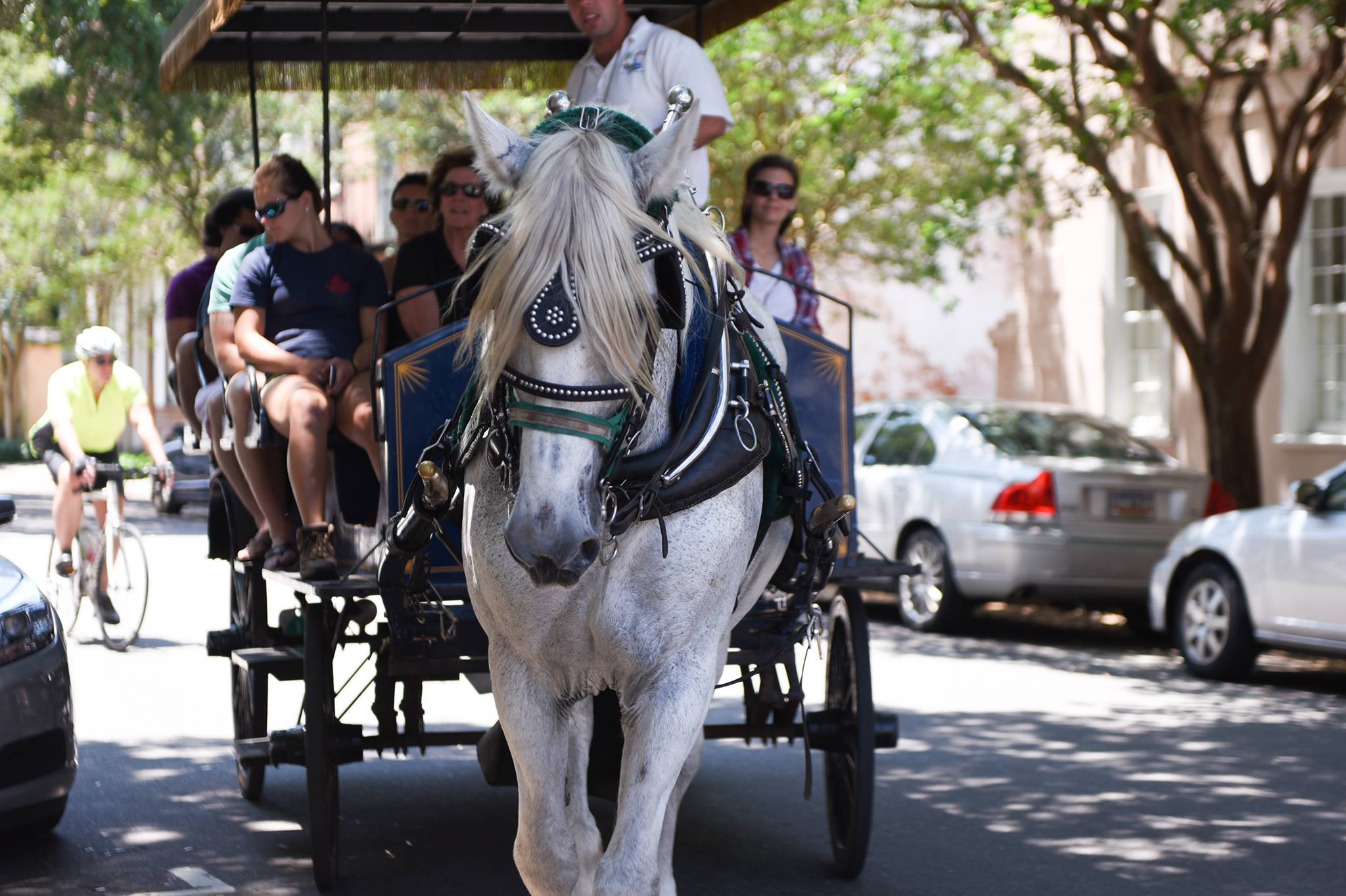
Travel and Leisure recently ranked Charleston as number one on their list of best cities in the world. Unfortunately, this position may be short-lived. In the words of one tourist, “My enduring memory of the visit (to Charleston) will be the sight of one of your carriage horses foaming at the mouth as the poor creature pulled the carriage full of sightseers, through the street on a very hot Saturday.” (see The Post and Courier, August 21, 2015). Letters such as this may indicate one reason why Michael Connelly, from Fodor’s Travel, wrote an article on 15 things not to do in New York City. His advice included “Don’t take a carriage ride.” The Charleston Carriage Horse Advocates (CCHA) urges the same for our city.
Growing Concerns
July 2016 broke the record for the hottest July in Charleston. Horse-led tours are halted when temperatures reach 98 degrees or the heat index hits 125, but there are no guidelines currently for humidity. Heat stress can occur when these levels surpass 75%. Unlike cities such as New York and New Orleans, Charleston’s regulations allow horses and mules to pull carriage tours in the most extreme weather conditions of the summer. Surveys by Charleston Magazine and The Post and Courier reveal the growing concern for these animals. In 2014, 49% of the respondents polled in favor of banning carriage horses in Charleston. In 2015, the percentage increased to 72%. Despite this growing dissatisfaction, little has been done to change how the carriage industry operates.
The City and CCHA’s Response
In July of this year, the city’s department of Livability and Tourism announced the upcoming formation of a committee to address the issues regarding the carriage industry. This is the second committee to assemble after the collapse of a carriage horse in July of 2015. The CCHA found the recommendations of the first committee to be seriously flawed. Following the conclusion of last year’s assembly, the Charleston Animal Society senior director of veterinary care publicly confirmed that she was not allowed to fully review or comment on the committee’s findings.
Next Steps
 To ensure a fair review of the industry’s practices, the CCHA is appealing for an independent review. This will ensure that this year’s findings and recommendations are delivered from an impartial and unbiased source.
To show your support of the CCHA, follow us on Facebook and Instagram at @CCHA.join and on Twitter at @CCHA_join.
Categories: Equine Rescue, Horse Health, Horse News





 Straight from the Horse's Heart
Boulder County Fair grounds in Colo
“Dead silence at the rodeo”
And the Mexican rodeo no less – we know all about their treatment of horses
http://www.dailycamera.com/letters/ci_30267501/miriam-paisner-sad-spectacle-at-rodeo
LikeLike
Apparently – one horse dying isn’t news anymore! The women that wrote the opinion piece must have been the only ones who either understood(?) or cared!
LikeLike
I’d love to give you an update about the wonderful care here in Charleston. I took the time over a year ago to sit down and do my own research and visit the barns to see what they do for myself. All the while I’ve seen Ccha lie and mislead about it. Much of what they say I’ve seen disproven first hand by visiting the barns. I’d love to help write an update about their care.
LikeLike