Category: Horse Slaughter

No “Unwanted” Retired Race Horses

When a thoroughbred thunders past cheering racetrack crowds, it does so with the help of an off-track entourage of trainers, handlers and owners providing constant, doting care.

But for the horses no longer making money on the racetrack or in the breeding barn — when they become too old, injured or too slow to race — that attention quickly evaporates. And their future becomes anything but certain.

Rate this:

New Report on Human Health Risks from Consumption of American Horse Meat

The Humane Society of the United States issued a report detailing the food safety risks associated with consuming meat that originates in American horses. Horses in the U.S. are primarily used for companionship or competition, therefore they are not treated in the same way as animals raised for human consumption. Horses are commonly given pharmaceuticals that have been banned for use in food-producing animals by the U.S. Food and Drug Administration and the European Commission’s Food and Veterinary Office.

Rate this:

A Stroll Down “Horse Slaughter” Memory Lane

“Back in 2005 when the Belgians were murdering American horses in both Texas and Illinois the Wall Street Journal published an article on the subject which the then mayor of one of the Texas towns blemished and wounded by a bloody slaughterhouse took issue with. That mayor was the well respected and talented Paula Bacon of Kaufman, Texas. Mayor Bacon’s fight with the foreign scourge that bloodied America’s soil is epic and she will forever be remembered as one of America’s great and iconic heroines.

That same battle goes on today as even though the plants have been shuttered an elected official from distant Wyoming has reared her ugly head and aligned herself with the very same players that once darkened the American Equine Industry. Wyoming State Rep. “Slaughterhouse” Sue Wallis has chosen to sleep with the foreign enemy of the American horse and to ignore the voice of the U.S. public while Mayor Bacon bends to no Belgian wallet and to this day stands in defense of the American way of life, the principles that make this country great and the common decency that sets us apart from those who prey upon the weak and helpless.

Today’s post is a testimony to strength, honesty and commitment; virtues not understood nor possessed by those who center their lives on the killing and consumption of companion animals.

Hats off to Mayor Paula Bacon one of the last, true pioneer women of the American West.” ~ R.T.

Rate this:

Actress Bo Derek joins Sen. Mary Landrieu to push for ban on horse slaughter

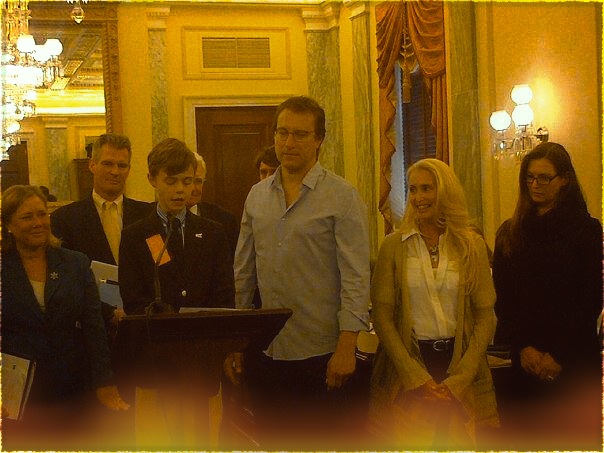
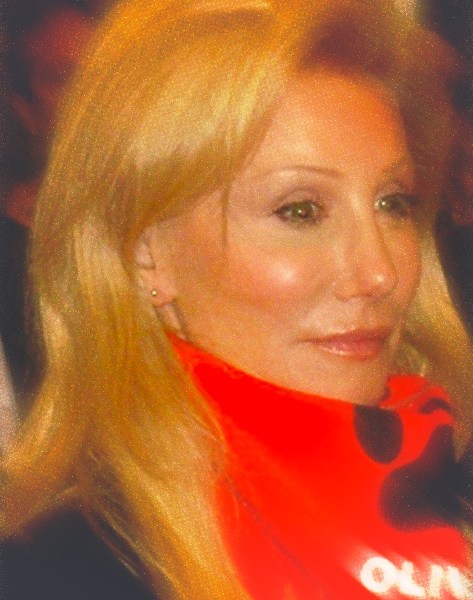
Washington – Sen. Mary Landrieu, D-La., brought some celebrity power to the Capitol Wednesday to build support for her legislation that would prohibit inhumane killing of American horses for food. Actress Bo Derek, best known for the 1979 romantic comedy,”10,” and speaking for the Animal Welfare Institute, pushed for passage of the bill. So did Amy Nelson, singer Willie Nelson’s daughter, and Raelyn Nelson, his granddaughter, saying they were speaking on Nelson’s behalf and his love for horses.

Rate this:

BLM Nat. Wild Horse and Burro “Slaughter” Advisory Board Meets Today

Due to a paying job taking priority over domestic travel Terry and I will not be in Reno, NV, today and tomorrow for the gathering of the BLM’s hand picked grazing, cattle, hunting and slaughter special interest Advisory Board meeting where the end and destruction of our national icons will be discussed and planned. Seasoned advocates are well aware that this bogus board ignores and rejects mass public opinion when it comes to the issue of saving the last few federally protected wild horses and burros on public lands but during this meeting all advocates should do their best to declare with disdain the appointment of self-proclaimed horse-hater and slaughter supporter, Callie Hendrickson.

Rate this:

Pickens Responds to Horse Hating Welfare Rancher in CBS Video

When the pro-slaughter crowd, led by the likes of Demar Dahl, talk about past practices as they applied to the management of our wild horses, or the approach perhaps more appropriately referred to as the, if we can’t eat it or make money off of it, let’s kill it, it is important to note they are talking about a time in our distant past. Their reflections speak volumes about the situation we find ourselves in, with over 40,000 wild horses in pens, a senseless gather policy that is destroying one of the Nation’s valuable resources, and a general lack of a coherent strategy to manage our wild horse populations. None of this is what Congress had in mind when they passed an Act 40 years ago to manage AND protect the wild horses in the Western United States.

Rate this: