Tag: Animal’s Angels

For Horse Lovers Everywhere: The Truth About Horse Slaughter

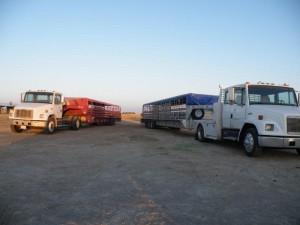
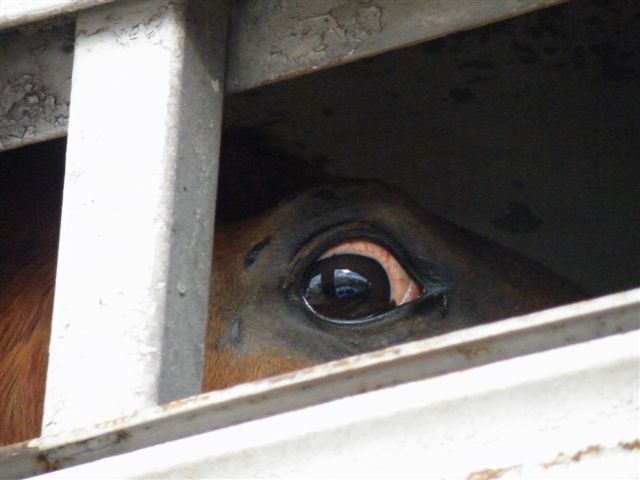
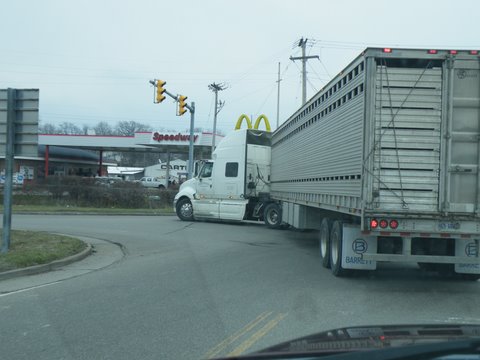
There is no such thing as humane horse slaughter at this time. What is stated below can be backed up with absolute evidence or extensive documentation of what actually happens. Please know that as awfully horrific as horse slaughter actually is, the untold suffering many horses go through from point of sale to slaughter is horrific. At the point at which the Kill Buyer owns the horse that is loaded on a large crowded tractor semi trailer, his biggest expense is fuel for the truck not food (or water) for the horses; which often are injured by the time they arrive at their first US feedlot stop many hours later. DOT and USDA Laws are often broken by driving too many hours; as well as drivers not providing horses rest, food and water at required intervals that are set forth in the Transport to Slaughter Act. Since laws are not enforced, Animals that are supposed to be protected suffer *before* the horrific death with the act of slaughter itself, regardless of the country where the horse is slaughtered.

Rate this:

Kentucky: Horse Capitol or Horse Slaughter Central

Ironically, Kentucky is among the worst states in terms of animal cruelty laws. Last year’s MSNBC article titled “5 worst states to be an animal: Abuse laws lax”, opens with, “What’s the punishment for being cruel to an animal? In five states – Idaho, Hawaii, Kentucky, Mississippi and North Dakota – the law’s response is, ‘Not much.'”
“Not much” is thoroughly corroborated by AA’s recent investigations in KY.

Rate this:

New Mexico Feedlot Sends Hundreds of Horses across Boarder to Slaughter

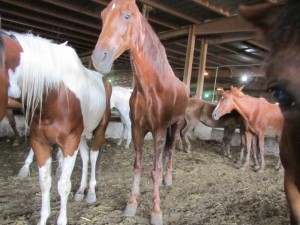
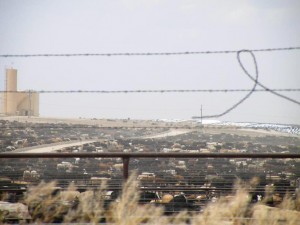
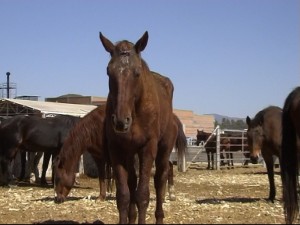
Upon arrival at the Southwest Livestock auction premises, investigators noted that there were approx. 500 horses in the pen area. Several trucks and empty single & double deck trailers were parked in front of the pen area. A sign next to the driveway advertised the auctions weekly cattle and horse sale, held every Saturday at noon. Several of the horses in the pen area had auction tags still attached to them. Some of the horses were thin. According to owner/shipper papers recently obtained via Freedom of Information Act Request, Chavez ships close to 400 horses every month to slaughter in Mexico. Records also indicate that many of the horses in his shipments end up at the municipal slaughter plant in Juarez, which is not approved by the European Union and still uses the Puntilla knife.

Rate this:

Animal’s Angels Investigate Known Texas Horse Slaughter Buyer

Animals’ Angels observed the collecting station of known slaughter buyer Garry Morris. There were approx. 40 horses in the pen area. One pen held a severely emaciated red roan Appaloosa, which was probably less than 3 years old. The horse, which was a BCS 1.5 on the Henneke chart, was obviously sick, since thick, purulent discharge was dripping from his mouth and nostrils. There also was discharge from the eyes and he had a dry cough, all symptoms of a severe strangles infection. The horse shared the same pen with numerous other horses, a few minis and an approx. 8 month old foal. Investigators never saw the horse move, he was standing very still with his head low.

Rate this:

Inspected & Rejected: Animals’ Angels Investigation Confirms EU Report

In May AA investigated the Morton, TX Feedlot and 2 export pens (Del Rio, TX and Eagle Pass, TX) after EU reports alerted us about large numbers of horses being returned at the Mexican border. EU inspectors reported that on the day they were present at the export pen, 40% or 12 out of 30 horses were rejected (advanced pregnancy, health issues and injuries). OISA data revealed that over a 10 month period when EU inspectors were not present, roughly 9% or 5,336 horses of 62,560 horses were rejected.

Rate this:

State of Texas Export Pens Feed Mexico’s Horse Slaughter Trade

Recent investigations at several Texas export pens reveal some disturbing issues. The pens, located in Eagle Pass, Socorro and Del Rio, are all operated by the Texas Department of Agriculture. Problems and concerns include: Despite the fact that horses will spend 38 hours or more in transit, no food is provided for the horses at the pens. This is a clear violation of the commercial transport of equines to slaughter regulations.

Rate this: