Posts Tagged ‘Horse Slaughter’

Source: 2013 American Equine Summit: R.T. Fitch

“It is ‘Feel Good Sunday’ and we are sharing with you the presentation that Terry and I made at the 2013 American Equine Conference 3 weeks ago this day.  It is posted, here, by special request as there is some humor to it but there are also gaps in the beginning as we edited out areas where I may have given away some of our undercover activity that will, hopefully, lead to litigation.  Please enjoy as we share our story about the horses of Outer Mongolia and in only 3 short weeks, in the future, Terry and I will be trekking on horseback across Tibet, the second largest horse culture in the world, and what we learn will be shared with you.  Keep the faith, my friends.!” ~ R.T.

~~~~~~~~~~~~~~~~~~~~~~~~~~~~~~~~~~~~~~~~~~~~~~~~~~~~~~~~~~~~~~~~

Click (HERE) to view video on Youtube

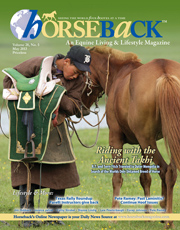
Click Image to View Magazine

Click (HERE) or Image to View Magazine

A Congressional Letter to Obama Calling for an End to the Carnage
Click (HERE) to download complete letter

Click (HERE) to download complete letter

Source: WBZ-TV Chief Correspondent Joe Shortsleeve

“We ought to stop this practice and protect these horses, and protect the American people, and other consumers around the world,”

BOSTON (CBS) – The practice of slaughtering race horses is considered inhumane by animal rights groups. There is also a growing health concern for people, as horse meat shows up in the human food chain.

A retired race horse often doesn’t have many options according to Tawnee Preisner of Horse Plus Rescue. “If they’re lucky, they go to a person who wants them and who will retrain them, but most of the time they go to slaughter,” she says.

That can mean a long and grueling trip to Canada or Mexico, because the last slaughter facility in the United States closed six years ago.

“The way in which they are transported to slaughter is inhumane,” according to Dr. Nicholas Dodman of the Tufts Veterinary School. “There are rules for example that they should not be transported in double-decker transporters and not crushed in, and none of those rules are policed.”

By one estimate, 160,000 American horses shared this fate last year, ending up in the human food chain.

Steven O’Toole, General Manager of the Plainridge Track in Plainville, told WBZ no horse leaves his premises for any type of slaughter situation. He added that Massachusetts race tracks were the first to prohibit trainers from sending horses to slaughter.

Although Plainridge has stiff penalties if they find a horse was auctioned to a so called “Kill Buyer,” O’Toole admits it’s not foolproof. “At some point a horse that races with us might end up in a slaughter situation because some will fall through the cracks.”

Nationally, preventing slaughter is even harder to police. A track employee from out West wouldn’t reveal her identity as she said, “It happens quite frequently. . . I think people just want to get rid of the horse anyway they can, and if they can make some money on it, all the better.”

There’s also a real health concern here. Race horses can be given all kinds of drugs in their lifetime, and that is not something that you want going from stable to table.

Dr. Dodman has studied the presence of drugs like phenylbutazone, or ‘bute’, in horsemeat. “It does bad things to your bone marrow. You really don’t want to consume it. The FDA knows that. They banned it for human consumption, and it is banned for use in animals intended for human consumption, but it is used like water in horses.”

In a global economy, Dr. Dodman worries that meat slaughtered in Canada or Mexico could circle back to the United States, particularly because it is cheaper than beef…(CONTINUED)

Click (HERE) to read the story in it’s entirety and to Comment

Source: Front Range Equine Rescue

Animal Protection Groups Demonstrate Potentially Toxic Nature of Horse Meat and Ask for Legal Declaration of Adulteration
Phenylbutazone, a human carcinogen, is prevalent in U.S. horse meat, along with numerous other drugs banned by the FDA in food animals. (photo: Animal Rescue Unit)

Phenylbutazone, a human carcinogen, is prevalent in U.S. horse meat, along with numerous other drugs banned by the FDA in food animals. (photo: Animal Rescue Unit)

(May 14, 2013) — Front Range Equine Rescue and The Humane Society of the United States filed a legal petition with the Iowa Department of Inspection and Appeals requesting that it adopt a rule that renders horse meat “adulterated” as a matter of law, which would ban the sale of horsemeat for human consumption. The petition explains that horses are different than other animals we eat because Americans do not raise horses as food animals, and American horses are treated routinely with many drugs and harmful chemicals prohibited from use in animals who will be eaten, and because of that their meat is unsafe for consumers.

These substances to which virtually all American horses have been exposed create the potential for great danger to humans if they are eaten, including cancer, life-threatening autoimmune diseases, and other illnesses of significant proportion.  The petition establishes that the only way to protect the food supply and the consuming public is for the Department to declare horse meat to be adulterated, unless the horse meat producers can prove that the horses never received substances prohibited for use in food animals.  This is of great concern since the chance for cross-contamination of beef with horse meat has been a regular topic of news in Europe, where horses are currently consumed for food.

Hilary Wood, President of Front Range Equine Rescue, states:  “The array of drugs that we give our horses while caring for them also makes their meat unfit for consumption.  Horse slaughter not only floods the market with dangerous meat but it directly causes horrendous cruelty and perpetuates the problems of horse abuse, problems for which we have workable and humane solutions.  The killer-buyers and horse slaughterhouses have no care about the danger of the meat, or the suffering of the animals.  On food safety and every other level, it is a bad business.”

Carol Griglione, Iowa state director for The HSUS, said: “Slaughtering horses for human consumption is inhumane for horses and creates an unacceptable public health risk. The only way to safeguard the food supply is to prevent this grisly practice from resuming in the United States.”

The request to the Iowa Department comes in the wake of the federal government’s announcement that it is considering applications from horse slaughterhouses anxious to open, including Responsible Transportation in Sigourney, Iowa.

Businesses interested in killing horses have been pushing their agenda despite the multiple levels of danger to consumers, the public, and the environment.  Even though they know  that every American horse has consumed drugs which prevent them from legally becoming edible meat, the horse slaughter interests have been lobbying to begin this unwanted, unsafe, and unhealthy process.

FRER is represented by lawyers at Schiff Hardin LLP.

Facts:

  • More than 100,000 American horses are sent to slaughter each year, mainly for consumption in Europe and Asia.
  • The slaughter pipeline is horribly cruel, with many of the horses suffering immensely during transport and by the often repeated attempts to render them unconscious. USDA has documented the abuse and misery horses suffered at former U.S. slaughterhouses.
  • Virtually all the horses used for meat spend most of their lives as work, competition or sport horses, companion animals, or wild horses.
  • During their lives, horses who end up at slaughter are given a constant regimen of drugs and other substances which are either illegal for food animals, or are potentially dangerous to people who eat them.
  • Under the current rules and regulations, there is no safeguard in place that can protect against the consumption of unsafe toxins in horse meat.
  • Consumers do not know of the inherent dangers because there is no control over the drug residues.

Source: By Spencer Kent/South Jersey Times as published in NJ.com

“I didn’t understand such an amazing horse could just be tossed away like that.”

Baia-Roe, a standardbred mare saved from the slaughterhouse, received a warm welcome to the farm of Caitlin Stewart in Pilesgrove Township, Saturday. ~ Photo by Spencer Kent

PILESGROVE TWP. — Baia-Roe is a 15-year-old standardbred mare rescued from a truck that was on its way to a slaughterhouse.

Caitlin Stewart, her boyfriend, Stephen Wade, and brother, Gustave Stewart, all initiated an effort to save Baia-Roe and this weekend a group of about 30 people from all over the state came to Pilesgrove to welcome the rescued horse to her new home.

Baia-Roe was just hours from being taken over the Canadian border by “kill-buyers,” people who purchase horses cheap to then slaughter in order to sell their meat, according to Stewart.

But a place called End of the Line Horse Placement located in Harmony, Pa. – a sort of horse limbo where the animals have the chance to be rescued, but not always – offered a chance to save Baia-Roe.

According to Caitlin Stewart, kill-buyers will sometimes stop at End of the Line on their way to slaughterhouses to see if anyone wants to purchase the horse for rescue.

Stewart saw Baia-Roe on End of the Line’s Facebook site and knew she had to save her.

“There was something about her eyes,” Caitlin said as family and friends gathered Saturday on her Pilesgrove farm. “I didn’t understand such an amazing horse could just be tossed away like that.”

Baia-Roe is a former six-time place winner trotter that was also owned by Amish.

“And when I saw that she was owned by Amish, I knew how hard she must have worked over the years,” Stewart added.

Stewart explained that when dealing with kill-buyers at End of the Line, once a rescuer commits to saving a horse, he or she must pay for the horse via Paypal within a matter of minutes.

“The kill-buyers don’t really care if the horses are saved or not,” she explained. “They just want to make a buck. So once they get their money, they’re gone. It doesn’t matter to them if they get money from me or from selling the meat.”

Once Baia-Roe was purchased for $300, she had to be put in quarantine and have a veterinarian examination before being cleared to travel to New Jersey.

In total, it cost about $2,000 to save Baia-Roe. However, Caitlin was able to gather about $1,400 in donations from family and friends.

This is Stewart’s third rescue horse. She is not sure if she will end up keeping Baia-Roe permanently or adopt her to a loving family. Her boyfriend said he would like to adopt Baia-Roe out and rescue another horse headed for the slaughterhouse.

Stewart explained that though there is not a huge market in the states for horse meat, places in Europe considerate it a delicacy, which is why kill-buyers get good money for the meat.

She also noted that a horse slaughterhouse in Roswell, N.M., is seeking to re-open after horse slaughterhouses were shuttered in the U.S. in 2007. Valley Meat Company, located in Roswell, is one of six slaughterhouses around the nation applying for a permit to slaughter American horses for food, Stewart said.

Nicole Barbye, of Mullica Hill, is a local horse trainer. She is also Stewart’s friend and partner in advocating against horse slaughter.

Stewart, Barbye, Gustave Stewart and Wade have banned together to try and spread awareness about the perils of horse slaughter. Barbye explained that eating horse meat is actually toxic because of a common anti-inflammatory drug horse owners often give to their horses called Phenylbutazone – or “bute” as it’s often referred.

“I am trying to get the word out about the toxicity of horse meat,” Barbye said. “Often horse owners and trainers flood horses with bute, which ends up causing damage to the horse because trainers will run them into the ground.”

Stewart, her passion as radiant as her sleeve of tattoos, added, “And what people don’t realize is, bute-ridden horse meat can give people cancer.”

In January, the United Kingdom’s Food Standards Agency (FSA), identified eight cases of bute-positive horse meat in 2012 that may have been sold for food, according to a BBC news report.

Stewart said her goal is to merely spread awareness about such incidents that often get overlooked.

On Saturday, the homecoming for Baia-Roe was a festive one.

Those present at Stewart’s farm enjoyed food and a huge “Welcome Home” sign had been made and placed on the side of a barn.

Stewart responded to whether she considered herself an activist and said, “I guess I’d consider myself an activist. I’m outspoken, but you hear ‘activist’ and you think it’s something political. This isn’t political.”

Neither is Caitlin a “liberal hippie,” as Stewart finished by saying, “Look – I’m a registered Republican. I just want to save these horses.”

Click (HERE) to Comment at NJ.com

Source: Children 4 Horses

Declan Gregg will be back on the Hill lobbying to stop horse slaughter

“‘Feel Good Sunday’ comes around once a week and a regular to these installments is our very own Declan Gregg who wants to represent YOU, the 80% opposed to predatory horse slaughter, when he goes to DC this upcoming week.  We should let him carry our comments as I can not think of a finer courier of hope than Declan.” ~ R.T.

~~~~~~~~~~~~~~~~~~~~~~~~~~~~~~~~~~~~~~~~~~~~~~~~~~~~

Click (HERE) to go to original post

Click (HERE) to go to original post

“I am heading back to Washington D.C. next week to lobby against horse slaughter and attend the Horses On The Hill event along side members of Congress and the Senate, the ASPCA, HSUS and AWI. I will be there not only to represent and be a voice for horses, but also to represent you, the 80% of Americans who are against horse slaughter. Please write messages to your legislators in the comments, including your thank you’s to those who are already cosponsors of the SAFE Act H.R.1094/S.541 – the Safeguard American Food Exports Act, which protects America’s horses from slaughter. (Please make your comments respectful – you can be upset and make your point without being disrespectful.) I will bring your messages with me to D.C. and pin this post for legislators in the House and Senate and everyone to read.

Click “like” on this post if you agree that there should be a federal ban against horse slaughter. Please be sure to CLICK ON THE ORIGINAL PICTURE when leaving your comments and clicking like or they will not show up on this post. I want your voice to heard and counted!! Thank you!

I will fight until we have won for the horses!!” ~Declan

Click (HERE) to leave your Comment

2013 American Equine Summit: Stephanie Graham

We will be featuring key presentations, everyday during this upcoming week.  The information contained within each is invaluable in fighting the horse-eaters and their propaganda.  Direct YouTube link for Stephanie’s presentation is: http://www.youtube.com/watch?v=A8qWmUQEGhQ