Posts Tagged ‘Texas’

Multiple Sources

“It’s about ego. It’s about pride. It’s about winning the horse race at all costs,”

In this Sept. 6, 2010 file photo, owner Jose Trevino Morales, center, acknowledges the crowd as he stood with the trophy after Mr. Piloto won the All American Futurity horse race at Ruidoso Downs, N.M. Prosecutors told a federal jury on Wednesday, May 8, 2013 that Morales, the man they say is the brother of leaders of Mexico’s most blood-soaked criminal organization, used the proceeds from their brothers’ ill-gotten gains to bankroll his horse-racing stable. (AP Photo/The El Paso Times, Rudy Gutierrez)

AUSTIN, Texas — A brother of two top leaders for one of the most powerful drug cartels in Mexico was convicted Thursday of buying racehorses to hide illegal drug profits.

A federal jury that deliberated for about nine hours over two days found Jose Trevino Morales, 46, guilty of conspiracy to commit money laundering. Trevino faces up to 20 years in prison.

Prosecutors say his older brothers, Miguel Angel and Oscar Omar Trevino Morales, are the leaders of the Zetas, a Nuevo Leon-based organization that has expanded beyond the drug trade to become the biggest criminal group in Mexico.

The verdict represents an important step in curbing the violence and corruption generated by the cartels, said U.S. Attorney Robert Pitman.

“The government was able to show how the corrupting influence of drug cartels has extended into the United States, with cartel bosses using an otherwise legitimate domestic industry to launder proceeds from drug trafficking and other crimes,” Pitman said.

Jose Trevino Morales was one of five defendants in the three-week trial, each charged with conspiracy to commit money laundering. Three other defendants also were found guilty. A fifth was found not guilty.

Several other defendants remain at large, including Trevino’s brothers. His wife and daughter have pleaded guilty to lesser charges.

Trevino watched silently Thursday as jurors delivered their verdict and were polled to confirm it. Several people in the gallery could be heard crying.

His attorney, David Finn, did not immediately comment afterward. Finn has previously accused the government of prosecuting Trevino and his family with the hope of extracting information about his brothers.

“He’s honest. He’s ethical. He’s frugal. He’s not in the dope business,” Finn said.

But prosecutors accused Trevino of helping run a scheme that went through $16 million in 30 months to buy, train and race horses. Prosecutor Douglas Gardner told jurors at the start of the proceedings that the operation created fake companies and in some instances fixed races. Horse owners, trainers and others crafted bank deposits to mask the drug money being used to fund the operation, Gardner said.

“They hang themselves by their actions,” Gardner said during closing arguments of Trevino and his co-defendants.

Francisco Antonio Colorado Cessa, Fernando Solis Garcia and Eusevio Maldonado Huitron also were convicted of conspiracy to commit money laundering. Jesus Maldonado Huitron, Eusevio’s older brother, was found not guilty.

The trial is being held in Austin because federal authorities in Central Texas took the lead in prosecuting the case.

The prosecution witnesses included a founder of the Zetas, Jesús Enrique Rejón Aguilar, known as “El Mamito.” Other witnesses said they helped funnel drug money into the United States.

One witness, imprisoned former Zetas member Mario Cuellar, described Miguel Angel Trevino Morales, believed to be a top cartel leader, as an active participant in the enterprise who kept a listing of the horses’ names and prices on his cellphone.

Finn accused prosecutors of trying to “tar and feather” his client by associating him with his brothers. He declined to call any witnesses.

The horses have been seized and auctioned by the government.

Mike DeGeurin, the attorney for Colorado Cessa, said after the verdict that his client did nothing illegal.

“He bought horses that ended up not in his possession,” DeGeurin said. “Was his intent to help somebody commit a crime? No.”

More than 400 of the horses have been seized and auctioned, and proceeds from the sales have netted the government $9 million, according to the U.S. attorney’s office.

Forward and Story by R.T. Fitch ~ Co-Founder/President of the Wild Horse Freedom Federation

“Feb 1st 2003 changed the lives of millions of people.  As a country and a human community we lost 7 brave souls over the skies of north Texas and Louisiana, that day.  The space shuttle Columbia came apart as she attempted to re-enter the atmosphere and the course of space flight was changed forever.  And likewise that day the experience was my very first glimpse into the soul of the horse.  Take it any way you want but I began to seek, explore and delve deeper into the equine/human relationship just 10 short years ago this very day.

The passing of the seven angels perhaps saved many future lives with the their sacrifice by highlighting safety as a major concern in future space flights, but their ultimate gift also opened up a few humble eyes to mysteries unknown, my own being one such pair.

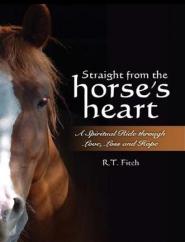
Below is the story and excerpt from our book, Straight from the Horses Heart: A Spiritual Ride through Love, Loss and Hope that was written in the cool, crisp dawn after the events of Saturday, February 1st, 2003.  It is the first equine insight I ever penned and because of that it will always be special.  We offer to you, today, in memory of those who lost their lives that day and to the memory of all those I have loved and lost since.

I mean it most sincerely when I say, ‘May the Force of the Horse® be with You!’” ~ R.T.

~~~~~~~~~~~~~~~~~~~~~~~~~~~~~~~~~~~~~~~~~~~~~~~~~~~~~~~~~~~~~~~~~~~~~~~~~~~

I Sit in Wonder

It started out as any other Saturday; up before the sun, make coffee, check email, say ‘hello’ to the dogs, greet the horses, and review the list of projects that needed to be accomplished before the sun set in the evening; however, this Saturday had a few dramatic twists.  I needed to be several places at one time during the same time frame, so there would have to be some fancy juggling.  The electricians were coming out to wire the new horse barn; at the same time, the farrier was arriving to trim the horses’ hooves; plus, we needed to pick up a load of hay prior to noon.  So, it was time to dance.

On the morning of Saturday, February 1st, 2003 all of Lafayette Parish, Louisiana was under a dense fog warning.  I stepped out of the house at sunrise, it was obvious that things might be moving a little slower until the fog lifted.

Ethan ~ by Terry FitchI was immediately greeted by the pair of happy-go-lucky German Shepherds who are always excited on Saturday morning as they get to go for a ride in the Big Red Truck to get hay.  Oh what fun!

As I gazed out into the pastures, I could not make out the four pampered ponies, as the fog was too thick.  I walked out through the back of the barn and no one was to be seen, so the odds were pretty good that they were in the back pasture munching down on their round bale.  I stepped out several yards, gave a call, and waited.  The mist swirled around me like foam in the surf as I listened intently for rumbling hooves, but the morning maintained its silence.

Unhurriedly, like dolphins slipping through the depths, the phantom shadows of the horses gradually began to materialize before me.  One at a time, in order, in line, they calmly walked up to me in formation for their rub on the withers, pat on the chest, and scratch on the belly; each taking their turn at receiving their morning hello, until all four circled me.  Together, we walked back to the barn.

At the barn I stopped and surveyed the new side gates that lay in place, waiting to be installed by the part-time ranch hand – me.  While Harley gently mouthed my cell phone in an effort to steal it from my belt, I began scratching down a list of hardware that I was going to need to accomplish the gate project.  I dropped my pen which meant Harley hit pay dirt as he quickly grabbed my cell phone and gracefully twirled it above my head by the antenna.  A big grin emerged on his face as this is his favorite game and he managed to accomplish the cunning feat without my interference – Harley one, Human zero.  I carefully retrieved my phone and bent down to pick my pen up when suddenly I heard a distant pop, bang or shot.  Immediately, I became alert to the fact that I was standing amidst a small herd of horses, in limited visibility, with “scary” noises occurring.

Quickly, I looked at the horses and then relaxed as they did not spook; they were not flustered or even nervous.  In fact, they were standing in an alert stance, heads held high and ears at full extension looking to the north/northwest, the opposite direction from whence the sound had come.  I wondered if it was a gun shot.  The thought slowly slipped away into ‘LaLa Land’ as I proceeded with my tabulations.  After all, who in their right mind would be hunting in the middle of a fog bank?

I remember concluding my list, walking back into the barn, and turning to gaze at our equine children – they were still there, standing in place.  In fact, they were in formation, one in front, three in back staring ever so intently to the northwest.  Their formation reminded me of a delta, a triangle pointing into the direction of their labored glare.  I was confused.  How could they be so interested in looking in the wrong direction; what were they hearing; what did they think they were seeing; and what was going through their minds as they appeared to be mesmerized and in a trance?

The sight of them there, standing in the mist looking off into nowhere, disturbed me to the point that I called to them.  No one budged.  I called again and the head of the Appaloosa slowly turned in my direction just enough so that one sad eye could look at me.  I motioned to him and he slowly turned around, walked to me with his head lowered and nuzzled my hand.  I scratched his forehead and noticed that his right eye had just formed a tear, one lone solitary tear.  I asked if he was sad; I asked if he wanted more food; I asked what the problem was and only heard a gentle sigh in response.  I dusted it off and went back to work.

At the time, I did not know that to the north of our quiet farm, a comet named Columbia was passing overhead, a bright meteor carrying the souls of seven courageous and generous human beings home.  I did not know.  I had no clue that seven souls of my species were headed across the bridge high over heads.  I did not know.

Four horses, however, stood gallantly at attention; four horses looked to the sky; and four horses felt something that I did not.

In reflection, I wonder if I did not miss something else that morning, something that my single-minded human brain did not hear, something special, something wondrous; yet, I was not listening.  I now sit in wonder and roll it over in my head time and time again, that gentle sigh, that horsy response, and the tear in that eye.  What did it say; what did it mean?

Did I really hear something in the gentle escape of air from those equine lips, a sound so profound that it did not compute at the time it happened?

Was that a gentle whisper, a thought, a suggestion?

Was my soul, and not my ears, hearing those quiet words?

Was the meaning really what I now believe it to be?

Was my heart touched by the souls of the four horses when I still failed to understand; yet, admittedly heard the whisper, the soft voice that spoke on another level. “We are so sorry; we are so very, very sorry.”

I sit in wonder.

space-shuttle-columbia-crew

By Jerry Finch ~ President/Founder of Habitat for Horses

“The total economic value of a dead horse is zero.”

Jerry with baby Audi born at Habitat for Horses of a mare rescued from 3-Strikes – Photo by R.T. Fitch

Yesterday, myself and many others had a chance to testify before the Texas Senate Committee regarding the possibility of bringing back horse slaughter to Texas. The testimony stared at 1pm and lasted until around 6:30. If you want to watch the whole video, click here

http://www.senate.state.tx.us/avarchive/

Item 4, the horse slaughter part, starts at about 1:43 – just use the slider to move it to that time. The State uses Real Video to record these sessions.

I’ll have a lot of comments to make about this session, but I wanted to get this out to you as quickly as possible.

~~~~~~~~~~~~~~~~~~~~~~~~~~~~~~~~~~~~~~~

Senate Committee on Agriculture and Rural Affairs

Senator Craig Estes, Chairman

Tuesday, July 10, 2012

Testimony of Jerry Finch, Habitat for Horses:

Good afternoon. My name is Jerry Finch. I am President and Founder of

Habitat for Horses, Inc, a Non-profit Equine Protection Organization started in 1998 here in Texas.

I have been Involved in horses since 1958

I am a Level Three Equine Cruelty Investigator – receiving my training through the University of Missouri School of Law Enforcement

Since 1998, over 5,000 horses passed through the organization, averaging 350 incoming equine per year.

The majority of our horses come from various law enforcement agencies throughout Texas, from cases involving abuse, neglect and abandonment. Rehabilitated horses are returned to service by adoption, averaging around 340 horses per year.

Our primary goal is to provide education to horse owners on the best methods of care for their animals. By doing so, we have touched the lives of thousands of horses.

Habitat for Horses is accredited by the Global Federation of Animal Sanctuaries, an international organization that has established clear, specific standards for the humane care of equine and other species in captive facilities and for sanctuary governance and operational issues.

All of this is done on 100 acres in the Galveston area. We are in the process of purchasing an additional 600 acres to expand our operations.

Thank you for giving me the opportunity to speak with you today.

First, please note that I am not an ANIMAL RIGHTS RADICAL. I fully support the meat industry and work closely with any number of ranchers on equine welfare issues. While my organization is committed to the humane treatment of equine, the subject before this committee is about money, the dollars made from selling horses for slaughter -  nothing more, nothing less.

Those who want horse slaughter to continue, either as an outlet for the over production of horses or to rid themselves of excess horses, are in a complete panic. The reason? If nothing changes, horse slaughter for human consumption comes to an end on July 31, 2013.

On that date, the regulations of the European Union will prevent the slaughter of American horses in both Mexico and Canada because of the complete lack of traceability of the medication given to American horses.

The report from the Government Accountability Office, GAO 11-228, states “…additional certification may affect Canadian and Mexican exports of horsemeat to Europe and, in turn, may affect the future export of horses intended for slaughter from the United States to these countries.  For example, Canadian requirements went into effect on July, 2010, banning specific medications, such as phenylbutazone—the most common anti-inflammatory medication given to horses—and requiring a 180-day withdrawal period for other medications. Also, since November, 2009, Mexico has required an affidavit by transporters that horses have been free from certain medications for 180 days prior to shipment. Furthermore, effective July 31, 2013, the European Union will require lifetime medication records for all horses slaughtered in non-European Union countries before accepting imports of horsemeat from those countries.”

Translated, that means that without a complete passport system for horses in which ALL medication given to horses from birth to slaughter are entered into a massive database, the animals cannot be imported into the EU for human consumption. All EU horses sold for slaughter for human consumption now must have a passport. Without that passport, the horse will not be slaughtered.

The US has no such system in place, nor will we by July, 2013. Nor will the unsubstantiated 100,000 unwanted horses be accepted, because their history is unknown.

Currently, killer-buyers at the border are signing their own affidavits stating that the horses they present are drug free for a minimum of 180 days. Presently, 48% of those are accepted without any such statements, a violation of current EU regulations.

The establishment of a fully functional passport system in the US means that our government must spend massive amounts of taxpayer money on a National Identification System for equine, duplicating what now exist in the EU countries. I probably don’t need to remind this committee of the uproar over the Federal Government’s attempts at a National Animal Identification System. It failed when they attempted it before and it will fail again.

In that same GAO report is this recommendation:  “Congress may wish to consider instituting an explicit ban on the domestic slaughter of horses and export of U.S. horses intended for slaughter in foreign countries.”

Asking a state full of horse owners to spend hundreds of dollars per animal, to register each animal and each premises into a National Database and to fine us for any failure to comply, in addition to asking taxpayers to fund another massive government system just so three foreign companies, namely Chevidico, Bovery and Richilieu can make a profit by selling horsemeat to consumers in Europe is absolute folly.

But that is the sole purpose of horse slaughter. There is no honorable attempt to help our country rid itself of unwanted horses. The numbers of horses sold for slaughter is determined by a demand for horsemeat in other countries, not the numbers of abandoned, neglected or abused horses. There is absolutely no relation between the two.

In fact, a USDA study conducted by Dr. Temple Grandin found that 92.3% of horses sent to slaughter are healthy. Slaughterhouses do not want and will not take thin, sickly horses. At the six Mexican Border Inspection Offices involved in imports of live horses from the US, 5,336 live horses in 631 consignments were rejected out of 62,560 animals presented for import between January and October 2010.

Over 5,000 horses were rejected in a brief eight month period. What happened to these horses? Are these the “abandoned” horses that are so often thrown out as an example of the need for slaughter?

If this committee’s goal is to Review the impact of state laws relating to the closure of horse slaughter facilities across the United States and Analyze the impact on the equine industry and agricultural sector of the Texas economy, then I ask that you consider these facts:

In a recent survey, 80% of the American people are opposed to the slaughter of horses for human consumption.

In a 2005 study for the American Horse Council, Deloitte Consulting found:

The horse industry in the United States contributes $39 billion in direct economic impact to the US economy and supports 1.4 million jobs on a full-time basis. When indirect and induced spending are included, the industry’s economic impact reaches $102 billion. The study also estimates the horse population in this country has reached 9.2 million. This was 7 years ago.

The total economic value of a dead horse is zero.

The costs to the American taxpayer to establish a fully functional National Horse Identification System  will run into the millions and add another government department filled with inspectors, managers, programmers and database clerks to an already overburden budget. The return on the investment will be a few low paying jobs and a very negative environmental impact – except for the bottom line of those three foreign companies.

Those who are seeking to reverse the Texas law of 1949 forbidding the sale and transport of horsemeat are here because it means money in their pockets at the financial costs and against the wishes of those you represent.

I ask you to submit your report as finding that the re-establishment of horse slaughterhouses in Texas should not happen.

I am open to any questions either now or at any point in the future.

Thank you.

Click (HERE) to visit HfH and to Comment

by Jerry Finch ~ President/Founder of Habitat for Horses

The Reoccurring Nightmare has Returned

Jerry Finch of Habitat for Horses and R.T. Fitch of Wild Horse Freedom Federation with several of Fitch’s rescued horses, one of which thinks little of anti-horse/pro-slaughter politicians

There is no doubt that a certain breed of human enjoys making beer money from killing horses. Add that fact to the horse owners who have bought the pro-slaughter arguments hook, line and sinker. Between those two, and a few politicians, we have the perfect ingredients for an attempt to do away with the current Texas law forbidding the sale of horse meat and an attempt to open a horse slaughterhouse within the borders of the State.

Do I need to ask for your thoughts on this? Probably not, but I will ask for your attendance at the hearing that the Texas Senate will be holding this Tuesday. We need supporters there, a LOT of them. There are three anti-slaughter speakers – Keith Dane,of HSUS, Paula Bacon, former mayor of Kaufman, home of Dallas Crown and myself, each allowed ten minutes to present our case.

However, anyone attending will be allowed to speak for three minutes, even if it’s, “My name is Duddly Doright and I oppose horse slaughter.” A lot can be said in three minutes and now is the time for your voice to be heard.

This is important, guys. They want this hearing kept quiet so they can sneak this in without raising too much noise. Former Senator Charlie Steinholm, the pro-slaughter lobbyist, will be speaking, filling the air with a million lies about unwanted horses and the safety of horse meat. We can’t let this happen.

Senate Committee on Agriculture and Rural Affairs

Tuesday, July 10th, at 1pm

Hearing Room EI.028

Chairman Senator Craig Estes

Austin, TX

Join me. Show up and show your support. A lot of pro-slaughter people will be there. We need our side represented. We killed the slaughterhouses once in this state, I don’t want to do it all over again.

More details coming.

Click (HERE) to visit HfH and to Comment

by TALIA SHADWELL of STUFF.co.nz

“…dreams of becoming a world class trainer and, as the home of quarter horses, America beckons.”

“Let’s take Sunday off and hit it again, tomorrow…agreed?” ~ R.T.

Jed Southcombe, 16, dreams of Texas and will head to Germany next month for the World Youth Quarter Horse Championships ~ photo by David Unwin

For reasons that can’t be explained, some horses just can’t stand their trainers.

“He’s a good example over there,” says Jed Southcombe, gesturing at a grumpy stallion hidden in the shadows of another stable. “He doesn’t like anyone at all. He puts his ears back and his look says, `Piss off, leave me alone’.”

The 16-year-old Feilding High School pupil knows his horses. Making soothing clicking noises, Jed coaxes a strapping 3-year-old thoroughbred back into his stable with ease. The horse nuzzles him affectionately, but the young rider doesn’t fold, saying he has become used to a “tough love” approach even with his favourites.

“It takes ages to bond with them because you’ve got to work with them every day. You’ve got to do everything for them like children but you can’t baby them because otherwise they push you,” he says. “You can become great friends with them. But I’ve got a baby at home and I let him get away with stuff so he would play up. He’s a lot better now I’ve sorted him out.”

Jed has helped train many horses at his family home, but this year he will train one solo for the first time. He is also in training himself – next month he will represent New Zealand at the American Quarter Horse Association Youth World Cup in Germany. Manawatu District Council has awarded him a $500 grant towards the trip.

In preparation, Jed has been working at Copperbelt Lodge stables, cleaning up after 60 racehorses for the past six weeks under his school’s agricultural programme.

He is the second youngest in a team of six Kiwi teens going to the world cup. Of the 18 international teams, New Zealand sends the smallest number of competitors. As the big event approaches, Jed has been competing constantly and riding almost daily.

The quarter horse is a breed apart from the thoroughbreds Jed tends to every Friday at Copperbelt Lodge. The quarter horse is a shorter, stockier animal measuring 14 to 15 hands and which excels at sprinting short distances. The name originates from their ability to outdistance other breeds in races of a quarter mile or less, and they are immensely popular in the United States, particularly among cowboys who use them for stock work.

For the event in Germany, competitors do not bring their own steed – instead, the horses choose their master. For each event, be it sprinting, showmanship, pleasure class, or reining, human and horse are matched based on carefully judged rapport.

“You draw the horses out of the hat,” Jed says.

“What they do is they give a range of horses that suits an amount of riders. They put them into a big group for each country and if you don’t suit any horse they’ll change it for you.”

The young rider and trainer is quietly confident. He has represented New Zealand before, winning two golds and a silver against Australia last year in a trans-Tasman competition.

He was also awarded International Rookie of the Year in 2011 and has been asked to work in Australia and the US by trainers Mark Schaeffer and Martin Larcombe.

Jed has dreams of becoming a world class trainer and, as the home of quarter horses, America beckons.

“I want to learn all the disciplines, not just riding, that’s why I’m working in the stables. But I still want a job to fall back on, like engineering or something.”

At the end of year 13, Jed has plans to move to Texas to take up a job offer training quarter horses under the wing of American experts.

Press Release from the Equine Welfare Alliance

The 37 horses were being taken to the Texas-Mexico border for slaughter

photo courtesy of Nashville’s Channel 5

Chicago (EWA) – For the second time since January, a truck from Dorian Ayache’s Three Angels Farms was involved in a major accident on an interstate highway. The 53’ trailer broke in half on I24 just outside of Nashville less than an hour from Ayache’s property. The 37 horses were being taken to the Texas-Mexico border for slaughter.

The driver received several citations including driving a commercial vehicle without a commercial driver’s license. One horse was euthanized. The remaining traumatized horses, as with the wreck in January, were quickly cleared for travel by a veterinarian at the scene, loaded into another Ayache rig and on their way to Texas.

This incident is representative of the nature and economics of transport of horses to slaughter. These “bottom feeder” operations invest as little as possible which results in threats to public safety as well as inhumane treatment and care for horses. Transport violations in a USDA document contained hundreds of graphic photographs of horses whose injuries and conditions were violations of humane laws. The photographs were taken in 2005 while horse slaughter still operated at three plants in the U.S.

On the heels of accident last week, EWA received an anonymous undercover investigation trailing two of Ayache’s Three Angels Farms trailers to Texas. The investigation reveals the many illegalities and threats to public safety that are typical of transporting horses to slaughter. We are seeking information now regarding the fines and citations that were or will be issued to Ayache and his drivers.

Dorian Ayache is a well-known kill buyer with a record of disregard for public safety laws. Ayache has received 64 vehicular safety violations in a 24 month period. The DOT revoked his license in 2010 and he now operates with a DOT number under the name Edwin Ayache. Thus far, two major accidents have occurred under the name Edwin. It seems only a matter of time before human lives are lost.

Dorian Ayache is a well-known kill buyer with a record of disregard for public safety laws. Ayache has received 64 vehicular safety violations in a 24 month period. The DOT revoked his license in 2010 and he now operates with a DOT number under the name Edwin Ayache. Thus far, two major accidents have occurred under the name Edwin. It seems only a matter of time before human lives are lost.

Ayache’s Three Angels Farms drives multiple truckloads of slaughter bound horses to Presidio, Texas every week. During this investigation, Ayache was forced to take back 10-12 horses that were rejected by the Mexican slaughter plants. Mexico rejects thousands of horses each year and there is no documentation of what happens to the rejected horses. Investigations have revealed that many, if not all, are abandoned in the southwestern states. The pro slaughter rhetoric that horse slaughter offers a solution to the “abandoned horse problem” is disproved, and is in fact the cause.

EWA strongly urges immediate calls to the House Agriculture Appropriations committee to ensure horse inspections are defunded on June 19 and calls to legislators in both Houses to demand passage of the American Horse Slaughter Prevention Act of 2011.

  •  Ending horse slaughter puts a stop to the literal crimes against American horses by a foreign meat business.
  •  Ending horse slaughter puts a stop to the flow of unsafe, drug-tainted meat from animals raised in violation of food safety laws.
Click (HERE) for contact information on House Appropriation Committee (Must be accomplished NOW)
Click (HERE) to read detailed investigation

Investigative report supplied by Animal’s Angels

Dead Horses and Suffering Prove there is no such thing as “Humane” Horse Slaughter
The following abridged investigative report may be the best way of describing what we found in Presidio, TX and what took us there. It is important to remember that the situation at the export pens in Presidio is what is found everywhere along the horse slaughter pipeline.

In Shippensburg, PA or Presidio, TX; Butler, KY or Fairhaven, MI; Shelby, MT or Los Lunas, NM; Shipshewana, IN or Sugarcreek, OH– the evidence is stark and clear: Horse slaughter and transport on U.S. soil or not, means suffering and cruelty for horses long before they stand in the slaughter kill box.

Important Background to Investigation

Photos provided to Animals’ Angels and documentation obtained by Public Information Request show horses dying in C4 export pens and carcasses dumped in a dry creek bed. Taken in August of 2011, with approximately 350 horses on the property, photos depict several horses down, struggling and dying. Many were extremely emaciated and/or had open, untreated wounds.

Signed eye witness statements report horses without food & water, and “non-ambulatory horses dying where they lay in puddles of mud and urine.”

(All Photographs provided by anonymous sources, taken between 8/12/11-8/18/11)

After receiving cruelty complaints & pictures on 8/15/11, the Presidio County Sheriff’s Office stated that they would launch an investigation. On 8/19/11, the Sheriff’s Office removed several horses from the C4 pens. At the same time, the Texas Department of Environmental Quality (TCEQ) launched an investigation in regards to the illegal carcass dumping.

Animals’ Angels Investigation:

Animals’ Angels requested a status update from the Presidio County Sheriff’s Office as well as TCEQ in February and also submitted Public Information Act requests regarding horse shipments and any prior investigations of the C4 pens.

The TCEQ request revealed that they investigated dead horses being dumped on private property by C4 on October 2010, June 2011, August 2011, finding a total of 56 or more horse carcasses, most along Cibolo Creek. At least 6 were microchipped, one horse was branded with a blue “D”, indicating that it had been delivered to the pens by Dorian Ayache and then was rejected by the Mexican authorities. Paperwork obtained also showed that the following kill buyers were delivering horses to the C4 pens: Dorian Ayache (TN), Bill Richardson (TX), Joe Rios (TX), Trent Saulters (TX), Dennis Kunz (UT), Ryon Simon (MN), Double JJ Horse Company (OK) and Triple Crown Ranch (OK).

In the August 2011 report TCEQ states, “The cause of death of these horses remains unknown and should be further investigated by the appropriate agency having jurisdiction in this matter.” This would indicate that the sheriff’s office was enjoined to investigate.

However, TCEQ has informed AA that further information is not available to the public but is under “Management Review.”

The Presidio County Sheriff’s Office response included no documents of a cruelty investigation against C4. Apparently, there are also no records of any complaints ever being submitted. However, Deputy Sheriff Nunez acknowledged in an earlier email (8/15/11) to complainant the receipt of the complaint & the pictures and confirmed that 2 cruelty investigations were ongoing.

Dead Horse, notice trenching

The Sheriff’s Department did provide some documents of an investigation related to C4′s illegal dumping. It included landfill records, showing that in June, July and August of 2011 C4 dumped approximately 50 dead horses/month at the landfill.

The photographic evidence submitted to the Presidio Sheriff’s Department suggests cruel and inhumane treatment on C4 property where horses were in the “custody and control” (as described in state law) of C4. What happened?

Investigation on the ground: Presidio 3/ 6-7/2012

Investigators immediately observe a truck unloading horses from Three Angels Farms (Dorian and Edwin Ayache) whose February wreck in TN (crashing within an hour of leaving origin), killed 3 and injured several of the 38 horses. http://www.wkrn.com/story/16531100/overturned-cattle-truck-closes-both-directions-of-i-40.

A Dennis Chinn truck (Pratt, KS) sits empty nearby.

Both Ayache and Chinn trucking companies have many violations, the most recent include 31 violations for Vehicle Maintenance, 4 Unsafe Driving, 9 Fatigued Driving, Driver Fitness and Crash with Injury.

A second Three Angels Farm truck is observed with holes, loose boards, broken overhead piping that put horses at risk of severe injuries.

Wrangler Grain truck, Mount Pleasant, TX and Robert Jackson truck and trailer, Marietta, OK are also seen.

No vantage point allows AA investigators to see inside the pens. After renting a helicopter, investigators observe 2 dead horses in a pen with other live horses. Water is available to all horses, but little to no hay can be seen in the pens and there is no shelter from the desert sun. Investigators note temperature is already 93 degrees. TX Animal Health & Safety code 821.021 defines cruelly treated as “unreasonably deprived of necessary food, care, or shelter.”

Investigators believe the flyover caused C4 to remove the dead horses shortly afterwards. The horses observed on the C4 trailer as it waited outside the landfill appear to have been dead for some time, the bay mare observed from the air, is bloated, her legs stiff and extended. Scavengers have eaten her anus. The dead chestnut is terribly, extremely boney with hip, rib bones clearly defined, her anus also eaten. Investigators also checked horses for bullet holes that would indicate euthanasia, but none were visible.

Leaving the pens, investigators go to the border crossing and see two new Mexican transport trailers without semis parked in the unshaded broker lot, one already loaded. The trailer fully loaded with horses sits there for 4+ hours in the hot afternoon sun and is still there when investigators leave.

Investigators note that on these new trailers the sides can be closed completely, which makes it impossible to check en route if a horse has gone down or if there are other problems. Closed, the metal trailer would be intensely hot. Unfortunately and predictably, trailers loaded with horses documented at the border waiting to cross were completely closed.

Conclusion:

While some improvements were noted (no illegal dumping of dead horses was observed), horses are still dying at the C4 pens in Presidio. It appears carcasses are left in the pens with other horses and are not immediately removed. The pens have no shelter from the desert sun. Questions remain regarding adequate food.

Transport trailers & procedures observed in Presidio are unacceptable. Animals’ Angels has discussed with USDA officials the dangerous disrepair of the Ayache trailer, the detached loaded trailers waiting for hours, and the closed up Mexican trailers. They have promised to take a look further into each.

Concerns also remain regarding no confirmed sheriff’s investigation and TCEQ’s review that is unavailable to the public for an unknown period of time. It now appears that the slow deaths of multiple horses in 2011 were never investigated and that no charges were filed against C4 for cruelty to animals. It appears the real bottom line here is that horses suffered and continue to suffer in Presidio.

Horse slaughter is no excuse. A normal horse owner, who just left his or her ailing horse to suffer and die, would be charged with animal cruelty. It should be no different for these horses.

Click to read the full investigative report…