

by R.T. Fitch
Suit Too Late for the Calico Wild Horses
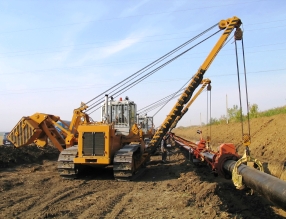 HOUSTON (SFTHH) – The controversial $3 billion gas pipeline from Wyoming to Oregon faces yet another law suit, filed by the Center for Biological Diversity on Friday. Once cited for the reason the BLM zeroed out a herd of almost 2,000 wild horses, with the death toll still ticking beyond 150 killed horses, the new suit alleges that the pipeline will cut across pristine land and harm endangered fish.
Two other environmental groups, Oregon Natural Desert Foundation and Western Watersheds Project recently abandoned their standing suits in favor of accepting $20 million from the pipeline owner, El Paso Corp.
The new suit was filed in federal court in San Francisco against both the Bureau of Land Management (BLM) and the U.S. Fish and Wildlife Service.
Noah Greenwald, endangered species coordinator for the group stated;
“The Ruby Pipeline will cross more than 1,000 rivers and streams, harming species such as the Lahontan cutthroat trout, Warner Creek sucker, Lost River sucker and Colorado pike minnow. More broadly, we don’t understand why they had to choose to put a new pipeline through some of the most pristine lands in the West,” he said. “Why couldn’t they use an existing pipeline route?”
Greenwald continued to add that if the constructions begin the Center for Biological Diversity is prepared to seek an injunction to stop the work until the issues stated are addressed.
The BLM project manager, Mark Mackiewicz said that the Federal Energy Regulatory Commission had issued a notice to proceed on Friday, the same day that the suit was filed.
“I imagine by Monday you’ll have hundreds of people out there starting to work on this,” he said.
He said the BLM and Ruby Pipeline LLC, a subsidiary of El Paso Corp., worked hard to address environmental concerns. Various sources indicate that El Paso spokesman Richard Wheatley declined to comment.
The Ruby Pipeline will begin at Opal in western Wyoming and cross northern Utah and Nevada before ending at Malin, Ore., near the California state line. Work on the project would begin at seven locations along the pipeline route, simultaneously.
The 42-inch-diameter pipeline will be among North America’s largest, approaching the size of the 48-inch, 800-mile-long Trans Alaska oil pipeline.
Prior documentation indicates that El Paso expects that the Ruby Pipeline will become operational in March of 2011
Related articles by Zemanta
- BP and Ruby Pipeline Connection Raises Questions About Removal of Calico Wild Horses from Northwestern Nevada (ppjg.wordpress.com)
- BP…Ruby…Mustang Roundups (thecloudfoundation.wordpress.com)


Categories: Horse News







 Straight from the Horse's Heart
I’m just so confused as to WWPs action and motivation here. And don’t tell me it’s the money. It can’t be; it has to be something in addirion to that.
And the silence (save for Katie Fites articles and posts) from WWP re the mustangs and burros is deafening.
I just don’t understand.
LikeLike
This should have happened sooner. I had expected it last winter. mar
LikeLike
The WWP pulled a fast one on the BLM and the cattle rancher, did an end around, and accomplished a magnificent feat! The money received from Ruby will be used to buy up cattle grazing leases and retire that land to the wildlife…a goal 200 years old, environmentalists have been trying all these years to accomplish what WWP did..and I salute them…all we could do was fight and slow them down, with the government backing this as part of a “clean energy” deal..initially all these “other environmental groups signed on to BLMs posistion, when it was only about removing the horses..sierra club and Nevada wildlife the cattle ranchers and all those so called gaurdians of wildlife and the land..bought it hook line and sinker, and are only NOW realising they got snookered..As far as their organizations..I no longer support any group who did not stand up for the wild horses, the wilderness society-ect, WWP does support and defend the wild horses on the land, and are our friends.
LikeLike
I have been working on the ruby pipeline angle since I came to help the wild horses, having worked on these projects, I knew this and 174 fasttracked leases for windmills as well as geothermal projects were going to have a huge impact on the horses…government does not handle this in the same way as a private landowner..the private landowner not only grazes his stock during and after construction..but is reimbursed -50,000 for every cow that falls into one of those holes-we had to panel every hole off while working and people from the company monitored the safety of the animals…the gov. said hey, we will get rid of all those animals….and take care of those environmental issues that slow you down..we will fasttrack you, by just pushing this stuff through. Thinking..because it is “clean energy” people will be on board.
LikeLike
Sandra – $50,000? If that’s not a typo, it’s a year’s salary for many folks!
LikeLike
50,000 is correct..per cow..a regular herford(which these were)..will probably only clear..5,000 in her lifetime-depending on market conditions..I was pulled off of equipment to monitor them when they migrated through the project area, which happened often..we were blasting daily, to open up pits..rattlesnakes were crawing everywhere from the disturbance…much rock exists right below desert soils..try driving a fence post in most of that country..which is why you see alot of rock jack fences. Can you only imagine what that will do to wildlife and nesting areas, sage grouse leks?
LikeLike
Yes, 50,000 per cow..I was pulled off of equipment at different times to keep an eye on the cattle as they moseyed on thru..My first thought..if I was that rancher.I would be out there at midnite pushing cattle into the holes..because he couldn’t come close to making that off of one cow in her lifetime…they generated that out over the generations of females that she would produce and so on..they paid the rancher 1 million a year to lease the property, on a lease of 10 years…can you see where i saw an opportunity to reklieve our national debt and remove us as a provence of China???
LikeLike
YIKES! No wonder this country is in such a mess! Is this policy available for viewing? Another FOIA case? This is INFURIATING, but standard for our out-of-contol government!
LikeLike
Here’s a profile on the Colorado pikeminnow (evidently “pikeminnow” is all one word).
http://www.fws.gov/southwest/sjrip/GB_FS.cfm
This was one of the two fish species that caused San Juan River remanagement. They begin feeding on smaller fish at about 4″ and are HUGE and voratious as adults. They’d been intentionally poisoned from the SJR many years ago because they fed on trout and about other fish they encountered, threatening one of the most popular and lucrative sport fishing areas in the U.S. As a “pike”, I imagine they put up quite a fight when caught and are a thrill for fishermen. Don’t know about “catch and release” since they’re “endangered”.
And I question the claim they’re “endangered” as a species throughout the West. The reason they were the subject of the SJR action was they were historic and endangered in THIS river. Maybe the same in other river systems. WWP may be able to shed some light on this.
My point is the Colorado pikeminnow “gobblers” may well be contributing to the demise of other endangered fish. And they seem to have a particular appetite for trout!
LikeLike
Should have said “about any other fish they encountered.”
LikeLike
Just an example, I worked on issues and commented on the stinkingwater HMA here in ore..no mention in the EA of energy plans..I went off on a google search and found test sites going in on that HMA…future energy projects DO have a significant impact on the wild horses..only because the BLM removes them to “speed up the process” not because they cannot work around them..it is for contractor convience.
LikeLike
Initially I had been a supporter of green energy projects on public lands as a way to get off oil, and money used would help in large part to pay off our national debt and put americans to work..HOWEVER, the government has a HUGE conflict of interest, as they also control the process for protecting the interests of the land and the wildlife and the citizens..all of which they abandonded in this pursuit that was meant to benifit the american people and instead only benifited the large multinational corporations..in true gov. fashion it has been mishandled by unqualified and self serving nincompoops.
LikeLike
I still think “solar rooftops” on buildings and houses could make a big contribution to energy independence. Always wanted to go totally “off-grid” or sell power back to the electric utilities. At this point, I don’t care if the companies lease units to folks (at a reasonable price). At least we would be sharing in the push toward energy independence and, hopefully, create JOBS in our own country.
Farnington, NM, generates its own power. Hydro and gas-fired, which supports local/state/regional producers. The big companies have been trying to get the city to sell out to them for years. BTW, Farmington was “lights on and running” during a number of black and brownouts on the Western Power Grid.
LikeLike
Because things get ‘fast tracked’ or otherwise have been left unscrutinized by the public we are behind in standing against some of this ‘progress’. Ruby Pipeline is still too expensive and not planned well. It serves too few for the costs and also is too destructive to wilderness and water sources. It should be stopped. mar
LikeLike
Ok, starting to get an even better picture of the “club” of DOI and these cattle ranchers both on thier private land and on thier lease of public lands in these energy schemes, or should I say scams.
Crash some planes into New York high rises, stall the war to find those terrorists by blaming a neighboring country, then make up WMD, don’t use exisitng buildings for solar power, make electric cars cost $40,000 when we are on the verge of a depression after already producing $15,000 electric cars and then pulling them, then scream give us fast tracked “energy independence” or we’ll send more of your sons and daughters to die (extortion), and last trash through public lands at exhobitant (criminal) costs to most taxpayers to benefit a few land owner club members, and same for wild horses – take from the taxpayer to benefit the BLM/Cattoor/cattle rancher club.
Sorry, I think I’m tired these days – my mind does imagine.
LikeLike
I included a long list of mitigations for energy development and many other issues impacting the HMAs. They will add to the cost, but I consider them sensible and doable. Who gets reimbursed for the wildlife that fall in the holes LOL? With elk, mule deer and other wildlife out there I would imagine at least some tumble to their deaths.
LikeLike
Included mitigations in a 13 page letter responding to the BLM request for comments. Sent the enitre proposal by regular mail. Will likely end up in the circular file since the requirements (catagories) and procedures (email?) have changed again.
LikeLike
much of the desert areas will have to be blasted, the engineering and geologicl reports done did not recognise the difficulties that would arise..it was intended to excavate most materials instead it required..heavy blasting for most holes an produced massive boulders..rattle snakes were crawling everywhere and really pissed…can you image what that will do to sage grouse leks and nesting areas, pigmy rabbits blown to bits…ect..the horses would be too wild to be anywhere near those construction sites..noi mention in the pipeline documents of the need to blast a 40 ft deep hole..for 600 miles
LikeLike
It only takes one honest county deputy to stand down the BLM, I obtained this link from the PPJ Gazette website:
http://www.morphcity.com/home/80-constitutional-sheriff-tony-demeo
This is the type of law enforcement we need at the county level where the wild herds are located, and I believe this is where we need to focus. Before the horses are all dead.
LikeLike
Debbie, This is very good info, thanks. mar
LikeLike
Could anyone provide me a link where the WWP has specifically and gone on record stating their support and/or actions taken to support the wild equines?
Thanks in advance.
LikeLike
I will get you the links, but just type wwp..go to their home page..read about the greenfire preserve, where they have adopted members of the Challis Idaho herd of wild horses to live on the habitat where they have deer elk mountain lion and I think wolves too.. showing that wildlife can all cohabitate without destroying the land..it is the over abundance of cattle they object to..and they have come to our aid in a legal suit on the calico complex..great reading on that by the way, and of course katies great testimony on the tuscarora complex..and we have gotten input from katie while we working on the Ruby pipeline, which she was also working on, Katie was at the WH&B meeting in denver.
LikeLike
I’ve been to their website. The Greenfire horses were all rounded up by BLM and a few returned….something about not utilizing the grazing permits and retaliation. WWP was neither notified or consulted about that roundup.
I’m looking for public comments about the equines by WWP. I have not seen (or maybe I did read the statements by Ms. Fite re Tuscarora) comments or press releases from WWP and disseminated by other news orgs/media about their official position. I’m looking for something specifically commented or litigated by WWP re wild equines…I went through the bulk of the filings and found nothing about wild equines even mentioned in any of the habitats they were trying to seek legal relief for. Doesn’t mean it’s not there, I just didn’t find it and I have met Ms. Fite.
Bright, hard working, intelligent individual.
LikeLike
I was wondering about the date on the BLM trapping since it only says “last week”. Terrible blow no matter when it happened.
Here’s the link:
http://www.westernwatersheds.org/greenfire/blm-roundup-greenfire-horses
I greatly admire what WWP is doing to save our water, natural landscapes and wildlife. That being said, I have to ask – 16 horses, 150 elk and 2,000 Whitetail & Mule Deer? Perhaps a seasonal usage explanation?
My next question is, if WWP was put in charge of an HMA, what would their priorities be? Their mission statment reflects their dedication to protecting watersheds and native wildlife. Where would wild horses and burros figure into their plan?
No offense intended to WWP’s fine work. Just a question.
LikeLike
WWP was able to aquire adjoining allotments after a legal battle ..that they intended to let recover..BLM is suing them because they did not put cattle on those allotments..I was following this..but have become sidetracked by EAs and comments and research so will have to check back and update myself..I read alot of stories from the small cattle communities and have a pretty good take on their “point of view” about WWP, they are feared and hated by both the BLM and ranchers..WWP has provided the roadmap for other environmental groups to challenge the BLM, but they still set the standard of excellence..they do consider wild horses to be part of the native wild populations, and a valuable part of the ecosystm..They are first and formost a defender of the land and water sheds, without those protections No wildlife can survive, we are dependant on their work if we are to keep our wild horses on the land.
LikeLike
WWP signed the Moratorium this past winter. Katie Fite has contributed her time and words to Laura’s work, too. mar
LikeLike
Thank you, Mar…you are correct. WWP signed the moratorium request letter. Ms Fite attended the DC protests (think I met her too) and has contributed to Ms. Leigh’s legal battle/filings effort. Brain cramp….forgot about the ignored by DOI moratorium now letter sent by a variety of environmental/animal/wildlife advocates.
That’s public enough for me.
LikeLike
Debbie, THANK YOU for posting that link. An HONEST Sheriff and a REAL federal judge.
LikeLike
Well it reads good, but I don’t see the sheriff out there defending or protecting wild equines…just water holes and cattle for private citizens with a history of utilization on public AND private lands angry at USDA/DOI for trying to push John Q. Public around.
Maybe there aren’t any wild equines out his way….wonder if he’d protect Ms. Leigh’s right to observe roundups if he could?
LikeLike
Researched NYE COUNTY, NV…it is a huge county north of Clark (Las Vegas) with the bombing range for Nellis AFB and Nevada Test Range-Yucca Flat (ground zero for nuclear tests); almost dead center, but long north to south.
Maybe he does have wild equines?!…anyone know if they are on the hit list for this year or have they already been wiped out? Lots of familar names like Toiyabe, Humboldt, etc.
LikeLike
Greetings from Elko NV. When I first pulled into Reno at 10:45 this morning it was 82 degrees. Since about 11:30 its been 90-95 for the rest of the day.
Watching the hills coming east into town I see dry hills. This is right along the freeway. Are the wells dry? Is the water being saved for anther day?
I saw PLENTY of water in the Humboldt. It looks like it comes down out of the mountains. But I have to be honest and tell you that other than the interstate I don’t know a thing about Elko.
This is just a long dusty car ride to the back and beyond.
You should also know that I have not seen one horse trailer or anything resembling one this entire day. Questions are swirling around and the most insidious one is this…are they now moving horses by rail???? I have seen two big trains headed west (towards Reno). Would the BLM arranged to have cars meet them at a certain place and load them up???? This is a terribly ugly thing to think but I can’t help wondering…
Thoughts anyone?????
LikeLike
Margaret, When I was very young I had a mustang who was the best horse I ever knew. In the 50s he had been caught in the SouthWest and sent by train to New Haven, Connecticut. He was destined for a glue factory but someone bought his freedom from death and he began a rough life until he came to us at age 7.
Long ago trains were used to haul tens of thousands of wild horses to deadly destinations East. I have no idea if this could be done now. There are many trains that run through the Humboldt River Valley of Northern Nevada. I am hoping no horses are on them. But I do not know.
Be careful out there. mar
LikeLike
Trains may haul horses again through America if Slaughterhouse Sue gets her way. Remember she just bought the old cattle stockyard rail stop. And she is now setting up her “501c horse rescue slaughter business”. Maybe in ‘talk’ with the blm now and who knows talking to horse pochers too.
Can we imagine how horrible the sight will be while waiting for a train to pass. Cattle cars full of horses passing through the cities of america.
Maybe we can hire the graffiti artists to paint ‘help these horses’ on the trains for us.
LikeLike
Trust me, if you never see Nevada from anything but the main roads you will never appreciate the wildness and beauty, like most of the desert county, the roads take the ‘low road” to scenery..The virginia range around reno is dry and Willis and his groups are always hauling water to them, perhaps the water existed at one time…but civilization and development is sucking it dry..you will see wild horses along the road there and not realise they are wild as subdivisions are -right there. Always have plenty of gas and plan to get up early to watch the daybreak somewhere off the road..where you will hear a stillness and quiet you can only experience in a few places, take in all the smells(cow poop in the HMAs as the exception) and be amazed at the life in the desert if you have the time to sit an observe
LikeLike
Some tips..get yourself some good maps if you are going off road..very little signage..blm and FS maps would be good that show the location of ranches, and spur roads and where they lead..I never did come across a camground that was signed as I went into the Humbolt Toyabe..no indication of how far..could have been 100 miles! Be in survivalist mode, have necessary items in your vehicle to spend the night, you may not want to come out..but stay for that sunrise, and daybreak comes earlier on the desert. Northern nevada has some spectacular country, god bless your trip and hope you see some Wild Horses! Remember..very little cell service..thats why the locals out there have those satellite antennas on their trucks!
LikeLike
I think that Sheriff would protect her Constitutional rights.
LikeLike
BLM to remove about 200 wild horses in Nye County
Page Last Updated: Saturday May 29, 2010 12:00am PDT
Associated Press – May 29, 2010 7:35 PM ET TONOPAH, Nev. (AP) – Federal land managers are seeking public comment on plans to remove nearly 200 wild horses from the range in Nye County.
U.S. Bureau of Land Management officials say they want to reduce the number of mustangs in the Reveille Allotment and Herd Management Area to 80 beginning in September.
They say the roundup is necessary to achieve the “appropriate management level” of horses in the area, located about 50 miles east of Tonopah.
Officials say it’s also needed to achieve a thriving natural ecological balance for wildlife, livestock, vegetation and remaining mustangs.
The deadline for submitting comments to the BLM is June 25.
LikeLike
Thank you Louie….maybe we might have another chance of drawing that proverbial line in the sand for the wild ones in Nye County in Spetember. Let’s see if the Constitution applies to the advocates just once.
LikeLike
Thisis the proposed Reveille round-up in Nye County.
LikeLike
This is part of the official statement:
BLM Signs Final Decision Record for Reveille Wild Horse Gather
Battle Mountain, Nev. – The Bureau of Land Management (BLM) Battle Mountain District, Tonopah Field Office, has issued the Decision Record for the Final Environmental Assessment (EA) for the Reveille Wild Horse Gather Plan. The decision is for the BLM to gather and remove excess wild horses so that about 80 wild horses remain in the herd management area (HMA). Fertility control will be used to slow population growth to reduce the need for future gathers. The Reveille HMA is located approximately 50 miles east of Tonopah and 12 miles south of Warm Springs, in Nye County, Nevada. The gather is tentatively scheduled to begin during the first week of September 2010.
The gather is needed to achieve the Appropriate Management Level (AML) in order to maintain a thriving natural ecological balance for the remaining wild horse population, wildlife and vegetation. The BLM issued its Final Multiple Use Decision in June 2001, and an Amended Wild Horse Management Decision in October 2001, establishing the AML at 138 wild horses for the Reveille HMA.
LikeLike