
R.T. Fitch
R.T. Fitch’s life has been anything but ordinary. Straight out of high school, he joined the U.S. Air Force Band during the Vietnam era, and while stationed in Hawaii, he spent weekends at Sea Life Park training penguins, sea lions, and whales. His path through life has taken many unexpected turns—including more than a few lessons in love—until meeting his wife, Terry, brought a lasting partnership and a shared passion for animals.
Over the course of his adult career, R.T. worked internationally in multiple countries, gaining a broad, global perspective that colors both his worldview and his writing. Now rooted in Texas, he and Terry live on a small farm surrounded by four-legged companions with paws, claws, and hooves. Together, they have devoted years to equine rescue and wild horse protection.
An ordained volunteer chaplain and professional Santa Claus for a local historical society—with Terry by his side as Mrs. Claus—R.T. brings warmth, wisdom, and joy to every season. His work reflects a life of service, wonder, and connection to both people and animals.
He is the author of Straight from the Horse’s Heart, a moving collection of true rescue stories and spiritual reflections, and Fangs of Light, a supernatural tale steeped in symbolic and metaphorical storytelling. The first in a planned trilogy, Fangs of Light blends myth and mystery to explore themes of identity, redemption, and the power of empathy—offering readers not only suspense and intrigue but a deeper look at the light and shadow within us all.

“The unconscionable slaughter of our American horses, both wild and domestic, has been a well kept secret held away from the U.S. public by an unsavory few. It’s time to expose this predatory business to the citizens and law makers of the United States and this film, if publicly released, is just the vehicle to accomplish that task.” ~ R.T. Fitch, volunteer president of Wild Horse Freedom Federation
RENO, Nev. (AP) — Federal officials have approved a final management plan for the Sheldon National Wildlife Refuge in northwestern Nevada that calls for the removal of all wild horses and burros from it within five years.
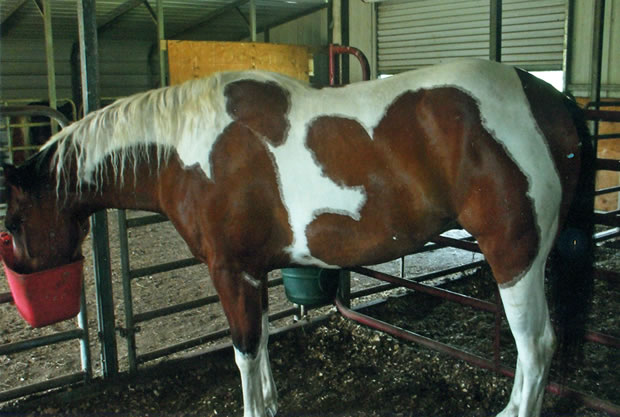
“It’s ‘Feel Good Sunday’ and as we do every weekend we attempt to bring something uplifting and/or positive in nature to cleanse the mind and refresh the soul before we head back onto the equine battlefield first thing Monday morning. So today we bring you a positive story with an unusual twist for you to ponder and one family’s victory for you to enjoy. Keep the faith.” ~ R.T.
WASHINGTON – The U.S. Department of Transportation’s Federal Motor Carrier Safety Administration (FMCSA) has ordered Tennessee-based truck company Terri’s Farm to immediately cease all interstate transportation services based on evidence that it was a chameleon operation for an unsafe truck company previously shut down by the agency.
The BLM determined that the emergency removal of the Paisley Desert wild horse herd is needed to ensure their survival until fall/winter moisture comes. Congregating on limited water sources and traveling great distances to other water sources will begin to negatively affect the horses’ health.
Approximately 200 wild horses will be gathered using a helicopter and then transported by trailer to the Burns Wild Horse Corrals. The Paisley Desert horses will be separated by sex and retained in separate corrals. Depending on environmental conditions, some of the horses may be returned to the HMA in order to bring the wild horse population to the Animal Management Level (60-150 horses.) The rest of the horses will be placed for adoption.

Hermiston City Manager Ed Brookshier told the City Council this week a proposed horse slaughtering plant would be “detrimental” for the town.
“I do not believe that project is anything but detrimental to the long term development and image of this community, and I believe it has very significant land use problems associated with it,” Brookshier said Monday.

In the last part of this series, we will look at the money trail. In doing so, we will detail the identity, motivation and the not-so-clear connections that continue to put horse slaughter up as “a necessary evil.”
“Exactly seven years ago this day, I penned these jumbled sentences, below, in an effort to make sense of the feelings that both Terry, myself and our horses felt as Hurricane Katrina was bearing down upon our small Louisiana farm. Today Terry and the herd are safe in Texas and it appears out of harms way, but the same is not true for our friends along the northern gulf coast of the mighty USA. So from half way around the world I extend a virtual hand to those who are sharing the same feelings and asking the exact same questions we struggled with over a half a decade ago; truly, may the ‘Force of the Horse®’ be with you” ~ R.T.
Chicago (EWA) – Following a ban funding for USDA inspections, and state legislation in Texas and Illinois, the last three horse slaughter plants in the US were closed in 2007. The result was that the horses were shipped to Canada and Mexico for slaughter. Last year the prohibition on funding was lifted, but now the very market for the meat from US horses is in question.
A news report has circulated recently about a massive population of free-roaming horses currently destroying land in the Navajo Nation and in New Mexico. The report, by Deanna Sauceda, asserts “Tens of thousands of horses are roaming the state and there’s no where to put them.” Based on no pointed sources, it’s ‘estimated’ there are as many as 90,000 horses roaming the Navajo Nation’s lands:
“There are no hard numbers as to how many horses are wild, abandoned or feral in New Mexico, but some estimates are as high as 90,000 on the Navajo reservation alone.” – intimating that there are far more throughout the rest of the state.


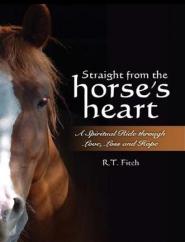





 Straight from the Horse's Heart
Most Recent Comments