

Guest Editorial by Jyoti Germain

Horses are not designated as livestock by the USDA - (Photo by Terry Fitch)
Treated as livestock or treated as wildlife? In regard to the fundamental issue at stake in the management of wild mustangs and burros on public lands, the federal government and the Bureau of Land Management have sided with the “treated as livestock” option. Congress has continually allowed the “cowboy” management option to be policy by funding the BLM Wild Horse and Burro Program (WHABP). Their funding is app 95+% for the on-going “gathers,” a gentle word for the intense stress and injuries caused by them, as well as for the “short” and long term corralling/storage of wild horses and burros that are removed from their home ranges (legal Herd Management Areas) by the BLM WHABP. These federal cowboys have a “stockpile” of them now and heavily lean toward the “lets harvest (slaughter) them” or “lets euthanize them” mind set. Consequently, the DOI’s BLM-WHABP is actually an anti-wild horse agency.
Horses have a remarkable history in North America and these herds have a history going back to anywhere from the 1500’s to 1800’s. In 1971, a law was passed to protect wild horses from the abuses suffered for decades at the hands of ranchers, their aircraft and their cowboys known as “mustangers.” They made a pretty profit but it was horrific for the horses. That is well documented. Why did the Wild Horse and Burro Act get such wide support from both sides? I can only surmise that the anti-wild horse ranchers/cowboys (AKA beef/meat producing lessees of public lands via BLM) knew they would actually control the policies carried out by BLM, simply because they have worked the political side to set it up that way and it’s benefited them for decades. Having a law is one thing but who is given responsibility for carrying out that law is another thing entirely. The protection of wild horses and burros were given to the ones that would treat them as livestock.
With the passage of the Wild Horse and Burro Act, Congress and the American public made a commitment to preserving wild horses in the areas “where they are presently found.” At the time, areas covering about 53,000,000 acres were designated as “herd areas.” Where once they had roamed over hundreds of millions of acres of open land, at least now they were guaranteed some ranges where they could be into perpetuity. Since that law was enacted, BLM has removed hundreds of thousands of horses from these areas while reducing their habitat or herd areas. Today, approximately 33,000,000 million acres still contain wild horses and are called “herd management areas” or “HMAs.” The BLM says they only want about 25,000 wild horses to live on these lands. (That’s all the forage and water they want to give them) Their decisions regarding “Appropriate Management Levels” (AMLs) are based on giving them the smallest share of water and forage. The ratio is approximately one wild horse for every 1,300 acres of their reduced legal HMAs. Most of these HMAs have more cows than wild horses.
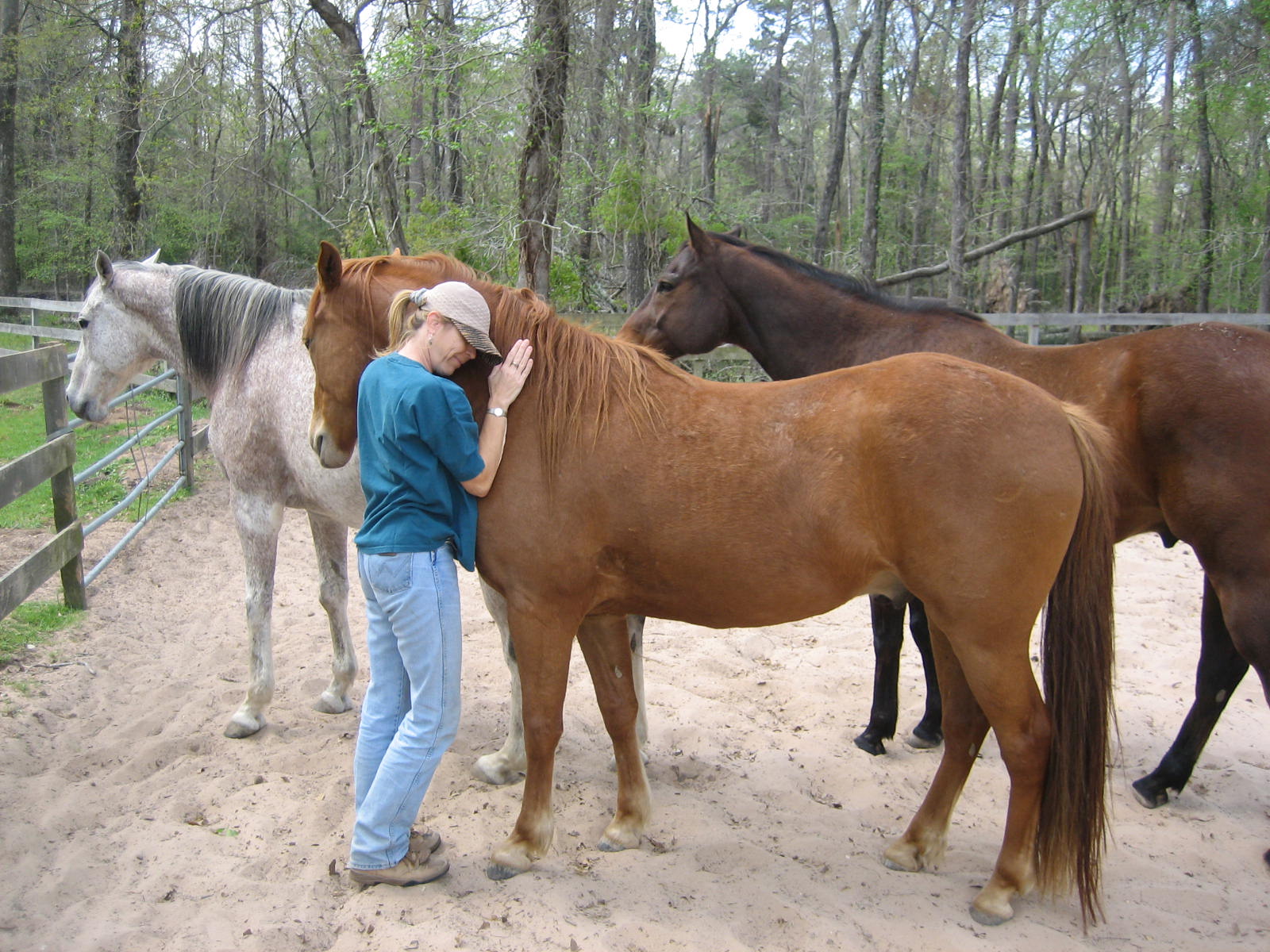
The bond between human and horse points back to prehistoric times - (Photo by R.T. Fitch)
The PL (public land) ranchers and their associates with political connections have enormous influence over the Department of Interior and the BLM. Many private contracts go to those that chase the wild horses with helicopters into pens, truck them to and keep them at holding facilities. There are ranchers that contract to just put them out to pasture. PL ranchers maintain the status quo for their millions of beef cattle and the wild horses are stuck and stagnating in short term holding corrals for indefinite periods. Most advocates believe slaughter is the likely end for many but is carried out beyond the public view. Thus, the Wild Horse and Burro Program’s main purpose is to commit on-going invasive and destructive practices upon innocent creatures who have inherited a sad fate. Private profit is the driving force and the bottom line is to promote the ongoing production of lots of cows and sheep (AKA animal agriculture). Yet there is still more to it than that. There comes with this group a bullish attitude and belief that they can impose their will upon our government and completely minimize or even eliminate the wild horses from their habitats. This is an attitude shared not only among beef industry groups but hunting groups whose main interest is in hunting big game. If they could shoot the horse, then they would want them there. This is why you may have heard the cry “managing to extinction” by wild horse advocates.
The rugged and strong wild horses in Nevada and other western states number less than 30,000 and are a tiny fraction of the grazing animals such as the domestic cattle that are pervasive all over this country yet the ranching and hunting groups are relentless in their arguments that wild horses are overpopulated. That is their opinion but it is not the fact. These meat-oriented groups do not care how much suffering is imposed by these roundups. They just want them gone and want us to think this is justified because they are convincing America that they are “overpopulated.” It’s very unfortunate for the wild horse herds that the beef and hunting industry lobby’s hold on the BLM will forever leave these animals subject to a strategy of “controlling” their numbers in a livestock/cowboy fashion. This means no end to the infinite helicopter roundups, captures, traumas, injuries and deaths that go on month after month and year after year. These “cowboys” are not giving up the fight nor are they interested in changing their ways. So, what would be their way now? Horse Slaughter facilities reopened. Why? Greed….the bottom line…. The cowboy wins the duel.
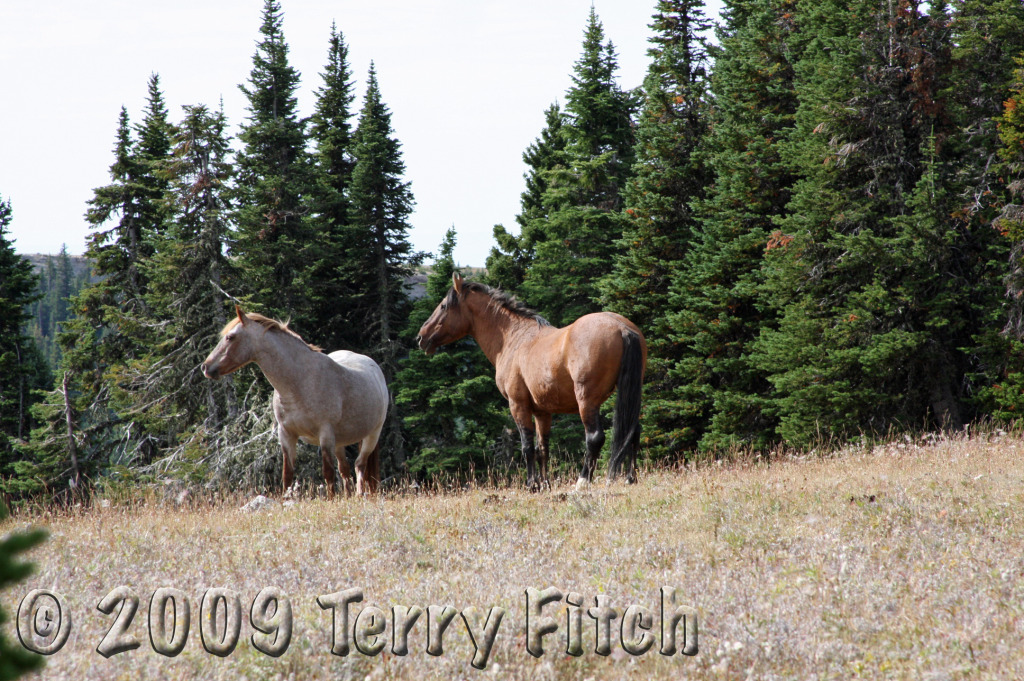
Wild Horses of the Pryor Mountains
However, there are more and more humane groups that do protest. In the humane and compassionate America, there is an ongoing upset and disgust regarding this situation which is neither fair nor humane for tens of thousands of wild animals. Wild horses are here. They live wild and are wild. Let’s take a fair look at how we can end the on-going harassment of these special animals. It is the principles that are inherent in nature that can best “manage” these animals and do it at no cost to taxpayers. All we need to do is support a balance of prey and predator. (The BLM’s line about no natural predators; it’s far from the truth) Allowing natural selection to control their populations and then standing back to allow them to fill an ecological niche within their legal herd areas as a part of nature reserves on our public lands would finally be a shift away from the cowboy culture that controls the BLM and their Wild Horse and Burro Program.
The wild horse eliminators would like to argue that horses are not native wildlife. That may depend on your definition. They are actually “reintroduced native wildlife” in North America. The “modern” horse (Equus Caballus) originated, evolved and lived wild on our continent for over 1.5 million years. Humans have only been in North America for about 12,000 years. Cows were brought here from Europe about 500 years ago. Do the math and see which of one of these you think is more native. For eons wild horses shared the landscape with about 33 other groups of large animals that ended up going extinct. With statements by qualified scientists and experts that the wild horses on our public lands qualify as a reintroduced wild life species, we are on the way to the cultural acceptance of wild horses being allowed a place in the wildlife community. A positive focus of a responsible Wild Horse Program would be to transition the largest Herd Management Areas toward balanced, vital and ecologically sensible open space nature reserves that include only native species which also recognizes the horse as native. In such a reserve, our government would not be spending our tax money on killing predator species, a service provided to ranchers by The Wildlife Service of the Dept of Agriculture to protect their cows, calves and sheep and which drains millions of taxpayer’s money.
Wild horse advocates are aware of the fundamental unfairness to the horses and burros. They feel that we have wrongly devalued the American wild horse. As a relatively undeveloped resource for study and enjoyment, wild horses could actually bring an economic benefit if the public could be offered recreational and vacation opportunities to do eco-trips – hikes or horseback rides out to see them and the flora and fauna that share their habitat. Wildlife ecologists, biologists and land conservationists could bring wild horse herd areas into the 21st century with preserves that use “Reserve Design” principles. Improving habitat quality by focusing on vegetation structure, prey species, competing species, water sources and other habitat elements would be a much more creative and constructive use of our tax dollars. In regard to “range management,” studies show that horse manure actually helps to build fertile soils and in other countries, horses have been managed to actually help to restore targeted ecosystems. Horses also do not produce methane, a powerful greenhouse gas which contributes to global warming and is emitted by cows in their belches. You may be aware that methane traps about 20-25 times the heat of CO2. A good argument could be made, that in this day and age, supporting horses is so much better than supporting cows.
People who have had the chance to work with mustangs know that they are an incredibly undervalued resource for the enjoyment of our lands and open spaces. Amazing natural horsemen like Monty Roberts, Pat Parelli, Linda Parelli, Clinton Anderson and Rick Lamb have helped horse people appreciate the amazing strength, endurance and intelligence of these remarkable animals. Photographers and film makers such as Ginger Kathryns and Carol Walker have taught us about their nature, their beauty and their toughness. If those minds were put together, no doubt they would come up with the some amazing ideas for creating a few vast wild horse reserves where wild horses could flourish with natural ecological controls on their numbers through natural selection. That’s how nature works and that is also how a natural wild horse preserve/herd area would work.
Horses are incredibly adaptable. They will adapt to us and we must also adapt to them. But it would require the private interests to cut back on the greed. It would help if we cut back on the beef if we’re at all inclined. Spending a lot of (tax) money to do the wrong thing is a status quo that should end. It is institutionally structured mass abuse. If the horses are actually doing fine on the range which means their body condition is above a 3, the best thing and most cost effective thing to do is LEAVE THEM ALONE. We are not taking “starving horses” off the range if their condition shows they are not starving! If the BLM is only serving private interests in their “management” of wild horses then Congress needs to issue a stop order or moratorium on all roundups. The only reason our government keeps this going is from a lack of principle or those PL ranchers are fattening their pockets as well.
For more information and to help stop the institutional abuse of America’s wild horses, email: equindeliverance@aol.com
![Reblog this post [with Zemanta]](https://i0.wp.com/img.zemanta.com/reblog_a.png)

Categories: The Force of the Horse, Wild Horses/Mustangs





 Straight from the Horse's Heart
This is a wonderful summery and solid lesson on what is going on. Thanks for giving us this. It brings continued hope for a creative outcome in new management for the wild ones. Mar
LikeLike
This is avery interesting new view on cattle grazing;
Part one from Time Magazine, January 25, 2010
How Cows (Grass-Fed Only) Could Save the Planet
By LISA ABEND Monday, Jan. 25, 2010
ENLARGE PHOTO+
Cattle on this Hardwick, Mass., farm grow not on feedlots but in pastures, where their grazing helps keep carbon dioxide in the ground
Jason Grow for TIME
PrintEmailDiggFacebookYahoo BuzzTwitter
MORE
619
Share
On a farm in coastal Maine, a barn is going up. Right now it’s little more than a concrete slab and some wooden beams, but when it’s finished, the barn will provide winter shelter for up to six cows and a few head of sheep. None of this would be remarkable if it weren’t for the fact that the people building the barn are two of the most highly regarded organic-vegetable farmers in the country: Eliot Coleman wrote the bible of organic farming, The New Organic Grower, and Barbara Damrosch is the Washington Post’s gardening columnist. At a time when a growing number of environmental activists are calling for an end to eating meat, this veggie-centric power couple is beginning to raise it. “Why?” asks Coleman, tromping through the mud on his way toward a greenhouse bursting with December turnips. “Because I care about the fate of the planet.”
Ever since the U.N. Food and Agriculture Organization released a 2006 report that attributed 18% of the world’s man-made greenhouse-gas emissions to livestock — more, the report noted, than what’s produced by transportation — livestock has taken an increasingly hard rap. At first, it was just vegetarian groups that used the U.N.’s findings as evidence for the superiority of an all-plant diet. But since then, a broader range of environmentalists has taken up the cause. At a recent European Parliament hearing titled “Global Warming and Food Policy: Less Meat = Less Heat,” Rajendra Pachauri, chairman of the Intergovernmental Panel on Climate Change, argued that reducing meat consumption is a “simple, effective and short-term delivery measure in which everybody could contribute” to emissions reductions.
(See the top 10 green ideas of 2009.)
And of all the animals that humans eat, none are held more responsible for climate change than the ones that moo. Cows not only consume more energy-intensive feed than other livestock; they also produce more methane — a powerful greenhouse gas — than other animals do. “If your primary concern is to curb emissions, you shouldn’t be eating beef,” says Nathan Pelletier, an ecological economist at Dalhousie University in Halifax, N.S., noting that cows produce 13 to 30 lb. of carbon dioxide per pound of meat.
(See where cows eat and what it means for the environment.)
So how can Coleman and Damrosch believe that adding livestock to their farm will help the planet? Cattleman Ridge Shinn has the answer. On a wintry Saturday at his farm in Hardwick, Mass., he is out in his pastures encouraging a herd of plump Devon cows to move to a grassy new paddock. Over the course of a year, his 100 cattle will rotate across 175 acres four or five times. “Conventional cattle raising is like mining,” he says. “It’s unsustainable, because you’re just taking without putting anything back. But when you rotate cattle on grass, you change the equation. You put back more than you take.”
(See the top 10 scientific discoveries of 2009.)
It works like this: grass is a perennial. Rotate cattle and other ruminants across pastures full of it, and the animals’ grazing will cut the blades — which spurs new growth — while their trampling helps work manure and other decaying organic matter into the soil, turning it into rich humus. The plant’s roots also help maintain soil health by retaining water and microbes. And healthy soil keeps carbon dioxide underground and out of the atmosphere.
Compare that with the estimated 99% of U.S. beef cattle that live out their last months on feedlots, where they are stuffed with corn and soybeans. In the past few decades, the growth of these concentrated animal-feeding operations has resulted in millions of acres of grassland being abandoned or converted — along with vast swaths of forest — into profitable cropland for livestock feed. “Much of the carbon footprint of beef comes from growing grain to feed the animals, which requires fossil-fuel-based fertilizers, pesticides, transportation,” says Michael Pollan, author of The Omnivore’s Dilemma. “Grass-fed beef has a much lighter carbon footprint.” Indeed, although grass-fed cattle may produce more methane than conventional ones (high-fiber plants are harder to digest than cereals, as anyone who has felt the gastric effects of eating broccoli or cabbage can attest), their net emissions are lower because they help the soil sequester carbon.
See the top 10 animal stories of 2009.
See the top 10 medical breakthroughs of 2009.
January 22, 2010 at 2:07 am
Part Two;
2 of 2)
From Vermont, where veal and dairy farmer Abe Collins is developing software designed to help farmers foster carbon-rich topsoil quickly, to Denmark, where Thomas Harttung’s Aarstiderne farm grazes 150 head of cattle, a vanguard of small farmers are trying to get the word out about how much more eco-friendly they are than factory farming. “If you suspend a cow in the air with buckets of grain, then it’s a bad guy,” Harttung explains. “But if you put it where it belongs — on grass — that cow becomes not just carbon-neutral but carbon-negative.” Collins goes even further. “With proper management, pastoralists, ranchers and farmers could achieve a 2% increase in soil-carbon levels on existing agricultural, grazing and desert lands over the next two decades,” he estimates. Some researchers hypothesize that just a 1% increase (over, admittedly, vast acreages) could be enough to capture the total equivalent of the world’s greenhouse-gas emissions.
This math works out in part because farmers like Shinn don’t use fertilizers or pesticides to maintain their pastures and need no energy to produce what their animals eat other than what they get free from the sun. Furthermore, pasturing frequently uses land that would otherwise be unproductive. “I’d like to see someone try to raise soybeans here,” he says, gesturing toward the rocky, sloping fields around him.
By many standards, pastured beef is healthier. That’s certainly the case for the animals involved; grass feeding obviates the antibiotics that feedlots are forced to administer in order to prevent the acidosis that occurs when cows are fed grain. But it also appears to be true for people who eat cows. Compared with conventional beef, grass-fed is lower in saturated fat and higher in omega-3s, the heart-healthy fatty acids found in salmon.
(See pictures of the world’s most polluted places.)
But not everyone is sold on its superiority. In addition to citing grass-fed meat’s higher price tag — Shinn’s ground beef ends up retailing for about $7 a pound, more than twice the price of conventional beef — feedlot producers say that only through their economies of scale can the industry produce enough meat to satisfy demand, especially for a growing population. These critics note that because grass is less caloric than grain, it takes two to three years to get a pastured cow to slaughter weight, whereas a feedlot animal requires only 14 months. “Not only does it take fewer animals on a feedlot to produce the same amount of meat,” says Tamara Thies, chief environmental counsel for the National Cattlemen’s Beef Association (which contests the U.N.’s 18% figure), “but because they grow so quickly, they have less chance to produce greenhouse gases.”
To Allan Savory, the economies-of-scale mentality ignores the role that grass-fed herbivores can play in fighting climate change. A former wildlife conservationist in Zimbabwe, Savory once blamed overgrazing for desertification. “I was prepared to shoot every bloody rancher in the country,” he recalls. But through rotational grazing of large herds of ruminants, he found he could reverse land degradation, turning dead soil into thriving grassland.
(See TIME’s special report on the environment.)
Like him, Coleman now scoffs at the environmentalist vogue for vilifying meat eating. “The idea that giving up meat is the solution for the world’s ills is ridiculous,” he says at his Maine farm. “A vegetarian eating tofu made in a factory from soybeans grown in Brazil is responsible for a lot more CO2 than I am.” A lifetime raising vegetables year-round has taught him to value the elegance of natural systems. Once he and Damrosch have brought in their livestock, they’ll “be able to use the manure to feed the plants, and the plant waste to feed the animals,” he says. “And even though we can’t eat the grass, we’ll be turning it into something we can.”
See TIME’s Pictures of the Week.
See the top 10 news stories of 2009.
« PREV PAGE
Read more: http://www.time.com/time/magazine/article/0,9171,1953692-2,00.html#ixzz0dIpdSUFt
LikeLike
only the BLM and its supporters would consider horses livestock.
LikeLike
Of interest, I found an outline on one of the BLM sites (Oregon perhaps?) and it lists the horses under the same block as wildlife, not in the livestock block. I wonder if this is true of all BLM sites?
If so, this is yet another inconsistency in their “telling” of thier position.
So much double speak from BLM! “Bad” things done to horses are “good” for them somehow, just as one example.
LikeLike
I just finished reading Wildlife not Livestock article. It was extremely accurate and wonderful. I’ve read everything that vicki tobin has sent and passed it along to my friends. We are all behind saving our beloved wild horses. I adopted a mustang 22 years ago. His name is Tex. He is a great joy in my life. I love all these horses the way I love him because I know how loving, loyal, bright and wonderful they are. Thank you for writing such terrific article. Jo De George
LikeLike
That is great!! 22 years ago,, so how old is Tex?
did you get him through the adoption program?
LikeLike
I would like to tell you my observations of horses in Montana, going back 70 years.
I grew up on cattle ranch in S.E. Montana, my Dad was a cowboy and I became his best” hand” because I loved horses, breathed horses and when I wasn’t riding a real one I was pretending to on my stick horse. Before my father met mom and had to settle down, he used to round up mustangs in Powder River County, Montana. He would gentle them, get them ‘green broke’ and send them on to the US Army, where they were sent to WAR. Our Mustangs, boys and girls. How about a horse veterns day.
Throughout the years, horses were treated as livestock, probably because they were bought and sold through the same auction yards as cattle, sheep and hogs. That’s what I so clearly remember. My Dad, being a cowboy and having this little slip of a daughter to train and ride young colts, yearlings, two year olds, we sold them at the Saturday Horse sale in Miles City, Montana. Same auction as we took our cattle to. What I’m saying is this, ranchers in Montana and throughout the west saw horses as livestock to be bought and sold, preferably for a profit.
I’m not making excuses for anyone but that was so deeply ingrained, passed down through the generations it was a ‘given’. So if we fast forward to 1971 when the wild horses became protected, they NEVER should have been put under the auspices of the BLM. They just don’t have the mindset to see wild horses as a protected animal. MOST PEOPLE who work for the BLM have a background in ranching, cattle, in general a ‘country way of upbringing.
I would like to visit with like minded folks who may have idea’s of who should be caretakers of our Wild Horses.
Trish
LikeLike
Trish, I am of a similar background, except my cattle and horse ranching days on my fathers side were over before I was about 4 years old, then went to live with my grandparents on their farm, with our own rescued circus pony and mustang, but still under the influence of that extended family, still “learning” from them. Then left that for town at the begnning of second grade (most of my “town” whippings came from wandering down the street to give carrots stolen from the fridge to the horses! And I would do it over and over again!).
My great uncles also gathered wild horses, I remember the brutle experience of seeing the “breaking” of these animals, which of course was not all the successful, as I remember many of them going to rodeo or worse. Have lost track of that side of my family since. I now often wonder if they would still have the same ideas, maybe they blog here, or maybe they blog on the anti wild horse/pro slaughter sentiment.
Anyway, my point being, that I had thought little over the years of that particular view of wild horses, or horses in general, though I retained a love of horses, I still saw slaughter of horses as the natural outcome, thats where I thought dog and cat food were supposed to come from – it had been my learning that that was just the way it was. These people that formed my early experiences were as you say “general country way of upbringing”, maybe even somewhat different than that, as these were “frontiersmen”, self raised in the Oklahoma Territory without parents. I know some went on to be Sherifs and high ranking officials in large cities. I think my grandparents instilled a somewhat different perspective, a real value for all animals lives and a real need for humane treatment, as other than the cows and goats which became our meals, the horses and the dog were all rescues.
Anyway, now flash forward 55 – 56 years, city girl, accidentialy found the Cloud program – and something clicked – remembering my childhood wild horse and realizing how much I had lost and how much my perspective was skewed. Perhaps, in fairness, these people that formed my previous persona were living and doing what seemed or actually was necessary to them for survival those 100 plus years ago, but I have no more stomach for the romanticism about the turn towards profits.
Some anti wild horse, or pro slaughter bloggers have claimed we are the romantics about saving the horses – but I beg to differ with them, they are the ones “in love with profits” – such an extreme blind love that drives them to all kinds of reckless, inhumane and costly results – that to me is the ugly side of romance.
Anyway, here we are, fighting for what really matters, and we will see what we vision or pray for someday, the sooner the better – no more of this cruelty, the wild horses back home where they belong, empty holding pens, seldom a helicopter in sight (even happier BLM and DOI employees because they will not have to be part of this insanity any longer).
Yes, a movement for “wild horse” contribution to the war efforts – a wild horse veterans day and monument! What a GREAT idea! Who do we start writing to?
LikeLike
There is a film out, “In Pursuit of Honor”, (1995) google and read about the film, you can even watch it online. Some of those horses could have been former mustangs! If you’ve seen the film then you know the impact it has on horse lovers!
I believe the more publicity for the Wild Horses that is out there in the media…the more we’ll be able to keep them alive and safe.
LikeLike
Wonderful! Catherine Ritlaw, Pres. Journey’s End Ranch Animal Sanctuary and mustang rescue
LikeLike
Super article! Thanks so much for sharing it with us, R.T. Great comments as well. Now, how do we make it happen? I will be emailing the address above, for sure. I’m just running out of ideas. People are SO set in their viewpoints, and the government – well!
I’m not ABOUT go give up, you understand, but I am a bit discouraged and there is SO little time. I just feel so powerless, and I know all of you have felt the same things. I’m SO glad I have all of you as my friends and fellow warriors. We must stick together – not only for the horses, but for each other.
Love ya.
LikeLike
TO JYOTI GERMAIN: THANKS FOR A GREAT ARTICLE. WONDERFUL IDEAS APPEAR WHEN WE START TO THINK OUTSIDE THE BOX THAT WE USE TO THINK IN WHEN WE WERE YOUNG AND NOT AS KNOWLEDGEABLE AND COMPASSIONATELY WISE AS WE ARE TODAY. iTS CHRISTMAS, AND ALL OTHER RELIGIOUS HOLIDAYS THAT MEAN SO MUCH TO SPIRITUAL FOLKS. MAYBE ITS TIME TO START TALKING IN CHURCHS ABOUT WHATS HAPPENING TO OUR WILD BROTHERS AND SISTERS. MY GRANDAUGHTERS ARE ALWAYS SAYING TO ME, AND THEIR PARENTS, “WHAT WOULD JESUS THINK OR DO ABOUT THIS SITUATION”? AMONG MANY ANSWERS THEY CAME UP WITH WAS “BOYCOTT BEEF AND LAMB” SINCE THATS WHY THE HORSES ARE BEING RUN OFF THEIR LANDS. SOMETHINGS TO CONSIDER.
MAY YOU ALL(MY DEAR WILD HORSE FRIENDS)WALK IN BEAUTY AND MAY PEACE AND LOVE FOR ALL WILD THINGS BE EVER IN OUR HEARTS.
LikeLike
The wild horses and burros are not powerless. They have laws protecting them as a class. The laws need to be enforced in good faith and strengthened by amendments restoring their full strength. The wild horses and burros are not powerless. They have agencies charged by law with their protection. The agencies have legal duties and responsibilities toward the wild horses and burros and must answer to their bosses in Washington, D.C. including Congress and the American public. The wild horses and burros are not powerless. They have federal funds allocated to their protection. Advocates need to make certain these funds are spent in a manner consistent with the intent of the laws protecting the wild horses and burros.
Wild horses and burros are not powerless, not livestock and not wildlife. They are “wild, free-roaming horses and burros,” by definition, with laws on the books (that many intelligent, forward-thinking, human beings fought long and hard to put there), federal agencies and taxpayer dollars to protect them.
LikeLike
Remember Don Glenns speach at the beginning of the Pryor Roundup? It was a recorded news interview for the whole world to see and hear, “the wild horses are starving!” he said!
Just coped this from TCF –
Time to “rein in” BLM’s wild horse and burro program – article
December 18, 2:31 PMLA Equine Policy ExaminerCarrol Abel
Excerpt:
…Don Glenn, head of the national WH&B program, stated to this examiner, “Wild horses are not starving. The press repeatedly gets that wrong. We don’t know of any that are starving right now. The range is in good condition.” Apparently, Glenn did not communicate that to his boss, Department of Interior Secretary Ken Salazar.
“One of the first things he said was something must be done because the horses are starving.” said singer Sheryl Crow of her conversation with Salazar in a recent interview with AP reporter Martin Griffith…
curse, curse curse!
LikeLike
Yes; I remember that!! He should make notes of what he says to who and when, so he
can keep his lies straight!!!
Definitely a person that lies by omission.
For instance when he stated the fact we were welcome to view the roundups, and he was asked more than once what he meant. His reply,” exactly what I said, anyone can come to watch the roundups, let us know and we will work it out,” but he never
mentioned the “land owners” may not allow us. Sad we pay his wages.
LikeLike
I understood that Livestock is not allowed to be “herded” or rounded up
with a helicopter. So, I guess the rules change for the bureau of Lousy Management, and depending on what works to their advantage; the wild horses are livestock and wild horses??? SURE..
Time to sue them for using the helicopters on “livestock?”
LikeLike
As much as I supported President Obama, he doesn’t seem to give credence to the environment or environmentalists. Salazar supported him when he was elected. Now he has made it legal for
FDA to inspect horsemeat. Right now a million dollar slaughterhouse is being built in Nevada that says it can process 200 horses a day. The handwriting is on the wall. We want Obama to appoint Raul Grijalva as the next Secretary of the Interior. I know Grijalva will have a lot of solutions and answers for issues we are concerned about. Urge Obama to appoint Grijalva, and for God’s sake let’s think outside the box and realize that our thoughts create the reality. Support our case, stay strong, and pray to the Universe for our wild mustangs and a miracle. It can happen.
LikeLike