

Story by Kristen Lombardi of the Sunlight Foundation
While Removing Native Wild Horses BLM won’t Tell Public Who Owns the Private Cattle Grazing on Public Lands
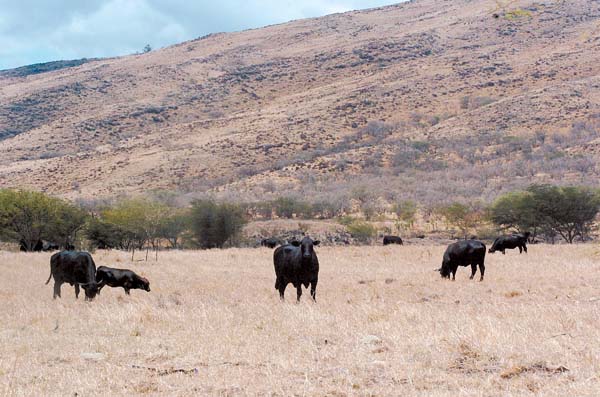
Public land grazing elicits some pretty damning declarations. Former Secretary of the Interior Bruce Babbitt once called livestock grazing “the most damaging use of public lands.” And conservation groups, like WildEarth Guardians, go further: “Livestock production is the most widespread and destructive activity on . . . western landscapes.”
And yet, little is known about permit holders authorized to graze sheep, cattle and goats on millions of acres of federal public lands in 16 states.
WildEarth Guardians, based in Sante Fe, N.M., is embroiled in a protracted legal battle to obtain the names of permit holders from the Interior Department’s Bureau of Land Management (BLM), which oversees public land grazing. The battle dates back to August 2007, when WildEarth Guardians and another conservation group filed a Freedom of Information Act request seeking copies of all livestock grazing permits and the names and addresses of permit holders. The BLM eventually referred them to its Rangeland Administration System, a publicly searchable database on grazing allotments. But that database does not include names and addresses of every grazing operator permitted by BLM.
Last September, the conservationists sued the BLM in federal court in Idaho for violating FOIA and, as the complaint states, “improperly withholding and failing to disclose information and documents related to . . . grazing permittees.”
Without names and addresses, advocates say, it’s virtually impossible to know who is using federal public lands for grazing, how many animals are involved, and on how many allotments. In short, no one can develop a profile of the typical public rancher. Yet the BLM administers a massive grazing program—18,000 permits for nearly 16,000 livestock operators using 138 million acres of public lands—that comes at a steep price.
In 2005, in fact, the Government Accountability Office (GAO) reported that 10 federal agencies spent $144 million managing such grazing programs, yet collected only $21 million in grazing fees. Conservationists and taxpayer organizations have mocked that it costs more to feed a cat or a goldfish than the $1.35 fee per animal unit month that ranchers pay to graze livestock on our public land. Ranching interests argue that public land has been used for grazing since the birth of the United States, and that cattlemen serve as public land managers who help government agencies cut costs and preserve open space of the West.
But potential land damage is what worries environmental advocates, who blame livestock grazing for contributing to the rapid “desertification” of the West. “It’s important to know who is involved in federal public lands grazing,” says Mark Salvo, of WildEarth Guardians, who has written about the threat to endangered species caused by the activity. “But without the entire list, it’s hard for anyone to figure out the big picture.”
A spokesman for the BLM said the bureau would not comment on pending litigation.
In its FOIA response in 2008, the BLM declined to provide permit holder names and addresses because such a disclosure, it wrote, “would constitute a clearly unwarranted invasion of privacy.” Last October, officials backpedalled somewhat and gave the conservationists information on 6,000 commercial permit holders, who arguably have no privacy rights. But that still leaves the identities of as many as two-thirds of the grazing permit holders in the dark. In its latest court filing, in November, the BLM claims that the personal privacy exemption covers the remaining names because they represent “family owned businesses or closely held entities.”
But conservationists aren’t buying the argument. After all, the U.S. Forest Service gave WildEarth Guardians the names and addresses of 10,000 permit holders—commercial and otherwise—authorized to graze livestock on national forest lands in response to a similar FOIA request. Besides, according to the conservationists’ lawsuit, the BLM has already handed out this information in the past to sympathetic industry groups like the National Cattlemen’s Beef Association and the Public Land Council. In its court filings, the BLM acknowledged that it “may have disclosed personal information about permittees to FOIA requesters” prior to 2005, when the bureau adopted new rules prohibiting disclosure of contact information for ranchers who describe themselves as small, private operations.
“They obviously have the information,” Salvo says. “They just won’t release it.”
![Reblog this post [with Zemanta]](https://i0.wp.com/img.zemanta.com/reblog_a.png)

Categories: Horse News, Wild Horses/Mustangs





 Straight from the Horse's Heart
BLM/DOI enjoy their high profile security which has allegedly hidden the preferential treatment of many who then backslap the retiring BLM state and federal top dogs right into cushy CEO and consultant positions. The entangled web of the Good ‘Ol Boys is just not something the public ought to know. The public at this point has become totally disenchanted with all levels of government operations. It is a small miracle that anything works at all… or does it? mar
LikeLike
Mar, so right. And, sadly it has worked just fine for those good ‘ol boys and gals.
LikeLike
Many have tried to improve things on public and private lands in the Western Ecosystems for decades. What is the use of science when we cannot apply it because we cannot gather information and counter management practices because of extreme secrecy? This has become a denser and denser smoke screen for those who know that this is not the real meaning of Multiple Use or the goals that Public Lands held for the protection and preservation of natural systems and even the resources within. Look at the manner the Interior moves now, doing whatever it pleases with no questions asked. This is the Age Of Destruction of our Public Trust. mar
LikeLike
Ok, BLM is wrong. I worked for fire departments and cities for years and there is absolutely no legal expectation of privacy regarding government contracts. So this fight should be totaly winable in the long run, should have been short run.
LikeLike
I started out wanting noncorporate family ranchers to be able to maintain thier public grazing. But their relunctance to join the fight to remove cattle and reinstate the horses rightful lands has spurred fires that are now my montra. I know a very few have – read recently that one actually was turned down by BLM when they asked to turn out wild horses instead of cattle. I say gut the whole entire welfare ranching program. Out of here. See ya later. Hosta la vista baby! Pretty sure that is not spelled right, but you get the messsage?
I have already been forced out of a job by the economy. Yet I am expected to continue paying taxes to support a program that results in profits for exported beef at the cost of the ecology of the public lands and the attempted extermination of our wild horses?
LikeLike
No, Rox, legally that is not an expectation for any of us. If we are to make change it means rocking some very comfortable boats and some very small ones, too. The small ranchers have been found to be multi-income families who ranch because of family influences; land inherited, learning from family and a lifestyle expectation. These are not the bad guys and like many have come forward to say they love the wild horses and have been dealing with them for decades in ways we do not reflect here very often. Corporate ranching should just end. Gone. The rest needs to be rebuilt from the bottom up. Is that our intention? I am not sure. If we are to separate the horses and the cows, maybe. There are options that will not shut down the small or family ranchers. I was hopeful once and thought we would get things in order with science and the fact that lands need to be tended and preserved and not overgrazed by cattle and sheep. It makes no sense that these factions are still not held accountable for destruction of our public lands. BLM is not a good manager. This stalemate is wasting time and money. mar
LikeLike
The Rolex Ranchers like Ted Turner can get the boot too, as far as I’m concerned. It really gets me that this man is slopping at the public trough paid for with OUR taxes.
How on EARTH has this been allowed to go on for SO long? Never mind – I think I know.
LikeLike
they do but they don’t, they will but they won’t. Same song, same story.
LikeLike
noticed when some large ranches are for sale they list their ranch as say 8,000 acres then right there they list their 5,000 acre blm grazing lease as part of the deal. land owned and paid for by taxpayers!
That grazing land lease should be open bid! I want to lease 5,000 acres for 3,000.00 dollars a year!!
LikeLike
Me, too. The prejudice and inability to recognize other needs and uses for OUR land has gone too far and this has got to change. We could be caring for many displaced horses without any more than a grazing allotment but for the unrealistic mumbo jumbo they say is the law… what law?? They make the Law!! mar
LikeLike
So blm leases are transferrable? No questions? Wow. Also, do you know that banks prefer when leasing rights go with the land. Increases value considerably.
LikeLike
It is a known fact that any lease associated with private land ownership with exculive “rights” privleages to public lands use is considered an asset that includes rights to secure private and public loans, increased real property value and blocked in permits that are windowed in 10 (think it’s 10 last I checked) year unfettered exclusive use rights blocks. The lease is used as a premeir selling tool when property is sold.
Do a google search on ranches/properties for sale in the West…read the descriptions very carefully. You will see how the sellers prominently feature public leases as part of the “perks” of ownership.
LikeLike
Banks are the ones who like to keep the leases with the land. They do add a good 50% to value in some cases. Good luck fighting the banks. They own us all.
LikeLike
Well, the financials institutions are in a battle right now to maintain their status quo…who knows, maybe they can be persuaded? Depends on who presents the argument for change. And as well all know, the Obama Administration is NOT an animal welfare advocate.
LikeLike
Well the good news re: Turner is that he, at least, isn’t running cattle on his lands. He does buffalo exclusively last time I saw him profiled/interveiwed on tv.
Of course, don’t know if he is contributing to mustang whacking in Montana.
LikeLike
I don’t see any reason Ted Turner would be involved with not wanting the small number of remaining horses to be left in Montatna.
LikeLike
FYI:
Interesting info and makes me wonder if Mr. Turner has ever been approached re: mustangs and burros…this individual is the largest private land owning individual in the US. No room for mustangs? Hmmmm. Seems like some key ranches are located near current and former HMAs. Anybody know? I thought one interview talked about some horses on his land somewhere. Now, I realize he is not the easiest person to get along with, but no one has ever approached him about this subject?
LikeLike
I wrote him saying that as the largest private landowner in the US, would he consider providing safe sanctuary to some wild horses. No response.
LikeLike
If anyone can show him how to make money protecting these animals, he’ll do it…IF he can be in charge.
I would think that eco-tourism for these animals might be something he’d be interested in. But who knows how he percieves what the conflicts are.
LikeLike
If Ted wanted eco tourism his herds of buffalo would suffice. He is a very private Private Citicizen. If he has wild horses we should ask him how he manages them. We do intend to have future wild herd laws cover wild ones on private land. There are many in this situation today. He has a ranch near Raton NM and they may have wild horses there. mar
LikeLike
Hmmm…no. (1) He is not a very private person. If it feathers his re: good publicity, he jumps; if not, he shuts down and then becomes very private.
(2) He actively is involved in the restoration a species of animals and plants that he deems suitable…where are the equines in this mix? Because they certainly used to trot across some of his now privately owned land.
(3) He owns numerous ranches. (check out my link above)
(4) He actually currently touts special hunting on his land. So his ecotourism is outside the buffalo mantra.
I put my comments to show that he doesn’t run cattle. If anyone knows what species he encourages outside of elk, buffalao, cuthead trout, deer, prohorns, black bears, wolf and coyote…please, speak up. Oh and he is big into watershed protection.
And my question would be, why doesn’t he feature wild horses?
LikeLike
Roger worked near the Raton, CO Turner spread and he saw wild horses there in 2002. I am aware of Ted’s foibles.. the private hunting, fishing, etc. I just wonder if he has a management plan for the horses? And we do intend, do we not, to protect ALL wild herds even those on private lands?? No, he is not into ecotourism altho’ he has the lands and animals to showcase… mar
LikeLike
I don’t believe hunting per se is the problem.
What I do believe to be the problem is accountability. Fed and state agencies are interested in it, regardless of law. The “agencies” pull wild equines off private and public land regardless.
The issue is where were they found, what where their migratory paths and of those how many are left? In addition, what are the true holding and roaming numbers?
What are the maps showing HMAs of 1971, current and the leases or nonag use?
Went to BLM and it’s very specific, doesn’t include state agencies and not comprehensive as to past areas, removal or agencies.
LikeLike
Yes, BLM does remove wild horses from private lands adjacent to BLM lands even when asked not to. Many BLM records going back years are hard if not impossible to find as Cindy MacDonald points out in her essay “The Dead Of Winter” where she was attempting to find maps and older boundaries. Where the horses actually are, yes, is the issue. How the land around them is manipulated, and even fenced to control the area the horses persist in can be seen from records. How the decisions get made to remove excess horses from a suddenly shrunken range/HMA. BLM has given us the finger when it comes to access. mar
LikeLike
I think we might want to be careful in our reproach of private land owners and wild horses..These could very well be the people we need to support the wild horses..as far as geting the government involved in it..I say Whoa…If i gave wild horses a home on my ranch…do you think I want the BLM butting in? No private land owner in his right mind would get invoved with that..Try coming up with a proposition that puts you in the shoes of that landowner before we start slamming them..
LikeLike
There are some private land owners that a prohorse and there are some that aren’t.
I don’t recall any specific “bang” against private land owners. What has been mentioned is that if they have leases, it is more than just a financial asset…it’s a special value added entity with many privelages and perks, especially monetary.
More importantly, government agencies DON’T respect private land owners (plos) either (more of the nightmare BS called emminent domain). I’ve spoken to/watched interviews with a few plo’s that were dumbfounded by the government harrassment of buffalo and mustangs/burros on private land without consent, consultation or documentation. They just came in and took them.
And in conclusion, I’m not going to walk on eggshells for plo’s with grazing permits. I won’t be rude or dispassionate either, but seriously, these folks aren’t perfect.
Ms. Longley, I don’t know where you live but the governments are already involved AND butting in. Why don’t you go check out how many horses have been run off of private land and warehoused on same? In fact, the Feds at Fallon use that as an excuse to keep the public out. I’m surprised some on this board didn’t reiterate that and many other situations to you.
LikeLike
Public lands are not “owned” by private land owners. The public owns public lands and leases it to private persons and corporations as part of the multiple use system. Problem is this one is upside down. Cattle are grazed on public lands only due to the payment from the land owner, being the us the public, to the leasee under the guise of a socilist program. However, socialism implies that those paying in are benefiting. In this case all we, the public, gets is beef imported from South America while the leasee makes profits from the export of the beef we pay them to graze on our public lands. The people that do allow wild horses on their public portion aren’t allowing them at all, the horses are supposed to be there. And the ones they allow on their private land is only allowed as long as BLM says so, and in my opinion the horses are probably supposed to be there anyway. Just a big mess all the way around for everyone and every wild horse. All I orignally wanted was that 20 million acres back to the horses – but BLM continues to INCREASE cattle allotments! We are talking about 20 million out of over 350 million acres – less than 6% – and they still want more from us?
On the topic of land value dependent on those public land leases. At this point in my perpective, the rest of the country is upside down on our mortgages, so, sorry but there is little sympathy that these grazers will lose 6% property value if they give back a little of our land to our horses.
Denise makes a good point that I had not thought of before. BLM removes horses off of private land and publc leased land where BLM pays NO TAX DOLLARS to let the horses run free, and sometimes against the wishes the of that land owner/leasee, and moves them to other private land owners who rake in millions more of our tax dollars to warehouse them. Does this make sense to anyone but BLM and Ken Salazar and those land owners raking in the bucks?
LikeLike
We have recently been exposed to what may happen to wild horses on private land. They still need legal protections under the law for protection from removals and harm. There is a responsibility to be met and acknowledged. If you were to have wild horses on your ranch the legal way to do it is to adopt and buy and release titled wild horses. But then they are no longer legally wild. If you have wild horses in residence when you buy a ranch they may or may not be under an HMA jurisdiction. If they are not.. they need protections written for them and included in new legislation. Other options may be explored with the state and protections created by the community to be participants in the welfare and preservation of such horses. mar
LikeLike
Yes, 3-Strikes. I am in need of a clarification – I thought Meduna was warehouseing BLM horses, being paid by BLM. Is this incorrect?
LikeLike
As we know,there are land owners who are allowing wild horses to use their land..there is nothing in it for them…start piling legal requirements on their generosity or government breathing down their knecks and see how quickly that land disappears..giving wild horses a designation as protected wildlife across all lands is one way, but you cannot own wildlife..so they need protections that are uniform across all states-not some covered by states, USFS, fish and wildlife, and parks..One uniform set of laws that have to be followed in respect to wild horses..I think some of these local law enforcement officials just don’t know what to do..Its not complicated..Just leave them alone
LikeLike
I think you don’t understand the system, nor my point. Private landowners have very little to do with mustangs on their land, traveling through, etc.
Agencies come in and take them, regardless of where they are. You seem to be operating under some misconception that advocating change for the current management of equines is going to drastically alter or burden private land owners, much more land owners with grazing permits on public lands.
And yes, unformity of management is a key tennant of our opposition to the “agencies”…but just try getting any truth out of anybody there. As to protection across all lands, in spirit that is what the 1971 Act was intended to do. Somewhere in the lies and self-serving interests that are state, federal and special interests…the equines have been being whacked to near extinction since the day Nixon danced his pen across the paper it was written on.
LikeLike
This is a good conversation and some things are starting to add up, like puzzle peices for me that I think I had overlookded or misunderstood. I am confused on a few points, but won’t dwell on those right now.
But one point about “property” though I hope we can continue to discuss as it is being considered here. That is, from my experience with fire departments and visa relationship to law enforcement is this: Even law enforcement and fire marshals cannot enter private property without cause, either you can see, hear or sense something is going on right now in front of you, or you have to have a warrant. Fire inspectors can enter “business” property by code only with written notice before hand. So, how can BLM enter ones personal ranch property and take what ever is on that land ie wild horse, burros, buffalo? Must be a law somewhere that allows that? Otherwise only law enforcement may enter under law only as the law allows for animal cruelty or some illegal acts, or someone that land is suspected of having committed some crime and then they would a warrant for that, which would have to specify what items or property they are allowed to take as evidence. Other than crimes against the animals themselves or they are stolen, I cannot fathom what judge would allow the removal of animals.
Don’t really need a response, but I am finding this line of conversation very interesting and enlightening.
I would add only that once a wild horse is adopted or sold to a private individual or company, corporation, it is by definition no longer wild, and is by definition their property, and I do not see how we as advocates can expect any type of inpection rights. We can, and must, if we have knowledge of illegal acts turn that information or evidence over to law enforcement, perhaps including BLM – that is about it. At least for today we do still have rights to our own personal property and and there still is an expectation of privacy within our own property.
I wish I could say things in more concise manner like so many others of you.
LikeLike
If nothing is done for horses on private lands then they may continue to be preyed upon by the unscrupulous. That is something to consider. If the horses are vulnerable then the community can decide what may be done. But one should not assume the land owner sees all or may have plans for the land that do not include the horses. Knowing what could be done is just being aware and looking out for the horses interests. A historic herd may very well belong to more than a landowner. mar
LikeLike