

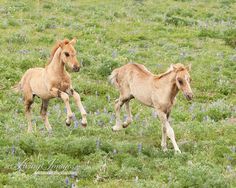
photo by Carol Walker
SOURCE: SCIENCE DAILY
Summary: Although seasonal effects such as reduced metabolic activity in winter are known even in domesticated horse breeds, effects on pregnant mares and their foals have not been investigated. Researchers have now demonstrated that seasonal changes have a strong influence on pregnancy and fetal development. Foals born early in the year are smaller than those born at a later time and these differences persist to at least 12 weeks after birth.
Seasonal and diurnal rhythms determine the life cycle of many animal species. In equids this is not only true for wild species such as the Przewalski but season-dependent metabolic changes also exist in domesticated horses. Horses can reduce their metabolic activity during the cold season and thus reduce heat loss. The effects of such seasonal changes on pregnancy and fetal development, however, have not been investigated so far. Researchers from Vetmeduni Vienna could now demonstrate that foals born in winter are smaller than herd mates born later in the year.
Reduced metabolism hits a critical fetal phase
The last weeks of pregnancy correspond to a time of rapid fetal growth. This phase is a key moment for development of the foal. “When a foal is born in winter, it is thus likely that the seasonal reduction in energy metabolism affects the fetus,” explains principal investigator Christine Aurich.
Read the rest of this article HERE.
Categories: Horse Health, Horse News






 Straight from the Horse's Heart
link to article receiving error ‘This site can’t be reached’. Link might be incorrect or been moved?
LikeLike
THANKS! I THINK I FIXED THE LINK. SHOULD WORK NOW.
LikeLike
Clicking on the article says the site cannot be reached!
LikeLike
This is true in just about any wild versus domesticated species. The modern chicken, for instance (I have chickens for many years) do not naturally lay eggs or rear young in the Winter, but industrial operations force the hens to lay without rest by keeping the lights on their barracks for 15 to 18 hrs per day. Breeding manipulation and housing, as described in this piece on the horses, effects the same out-of-sync human conceit.
LikeLike